Direct answer: approve a system, not a colour chip
Before resurfacing, a pool-finish mock-up brief should identify the exact finish product, format, colour range, joint or grout treatment, substrate and preparation assumptions, edge interfaces, wet appearance, texture, cleaning implications and the people authorised to approve it. The review should separate visual acceptance from technical confirmation: a client can prefer a tone, but the pool specialist and product supplier must confirm suitability and installation requirements. The approved sample or panel then becomes a controlled reference for procurement and workmanship rather than a loose image that different parties interpret differently.
Begin with the surveyed pool and selected finish family
A mock-up cannot rescue an unresolved substrate or repair scope. First record the existing pool construction, observed defects, previous finish where known, investigation results and the preparation proposed by the appointed specialists. Then identify the finish family being reviewed, such as glass mosaic or another pool-rated system, using the current manufacturer data and project specification. AstralPool's official lining range demonstrates that pool mosaics are offered in multiple colours, textures and formats; that variety is precisely why the approved product reference must be unambiguous. Confirm whether the submitted sample is current and commercially available for the intended project. Do not approve a visual sample as permission to omit required investigation, waterproofing or preparation.
Review colour through water and changing light
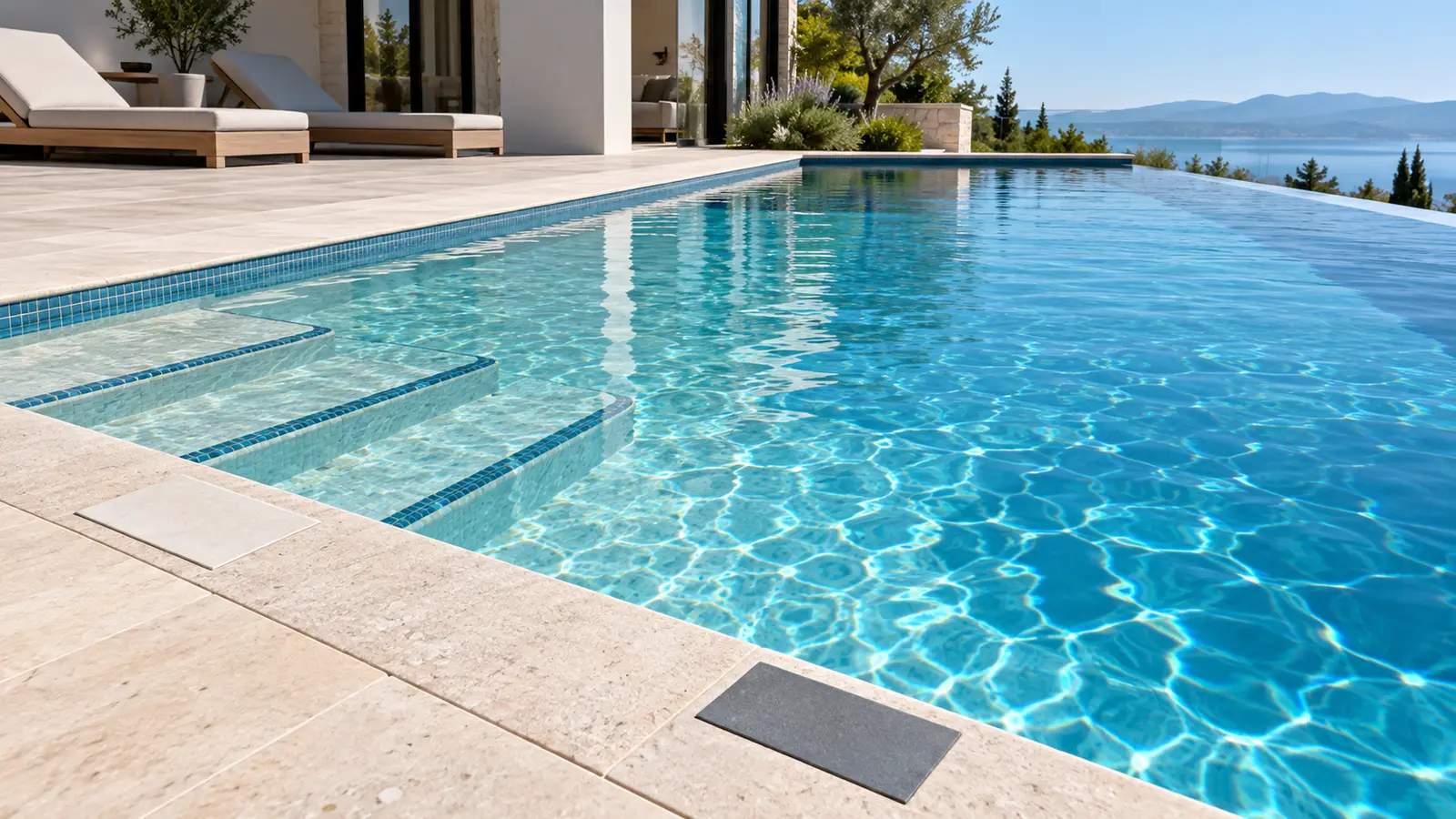
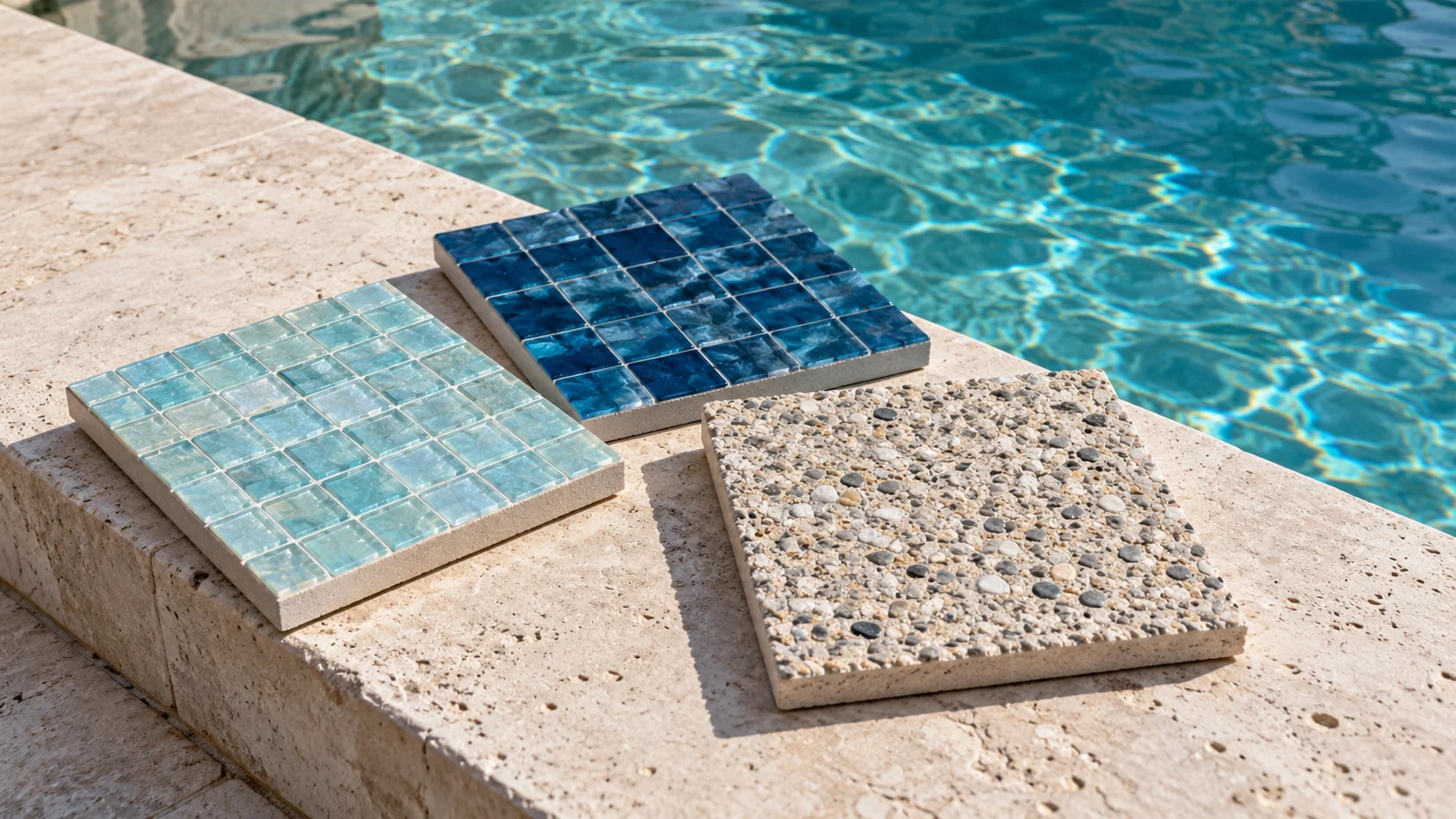
The finish seen dry on a table is not the finish experienced in a filled pool. Water depth, sky reflection, surrounding paving, shade, underwater lighting and time of day all affect perception. Compare realistic samples near the pool and, where the project method permits, review a wetted or water-viewed reference rather than relying only on a screen image. Test the relationship with the waterline, steps, benches and floor because their depths differ. The existing guide to choosing a pool finish explains the role of water, light and touch; the mock-up brief turns that decision into an approval record tied to an exact product.
Include joints, edges and adjacent materials
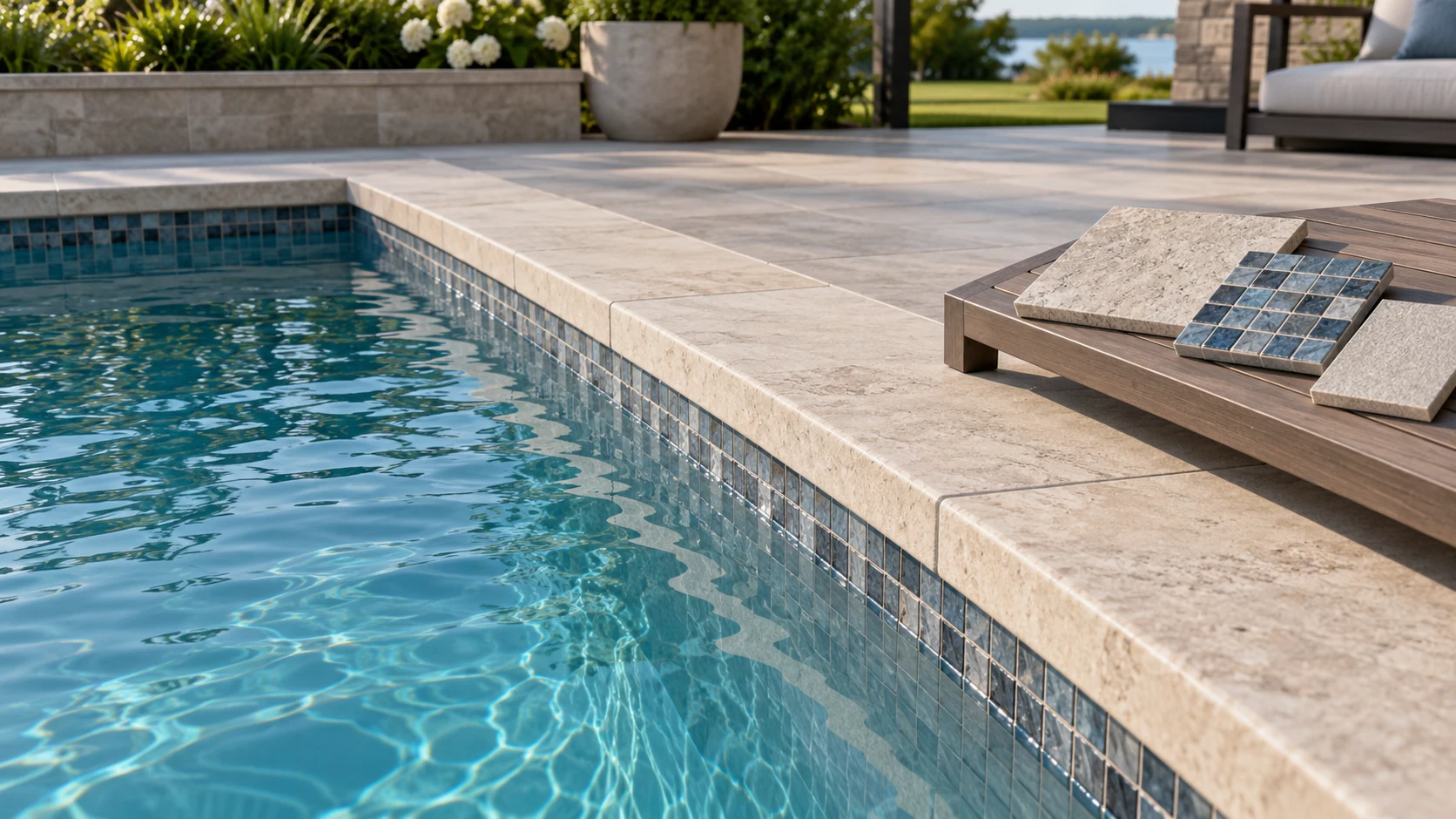
A representative panel should not show the face material in isolation. Record the intended joint width and colour where applicable, transitions at corners and steps, waterline treatment, and the relationship to coping, channels, fittings and covers. Product format can change the rhythm of curves and tight details, while a contrasting joint can materially change the field colour. The approved pool specialist should confirm buildability and movement or waterproofing interfaces. Link this review to the coping and waterline details before resurfacing, because a successful interior finish can still be undermined by an unresolved perimeter junction.
Test touch, care and visible variation
The brief should ask where bare feet and hands contact the finish, which zones need a different slip or comfort response, and what the manufacturer says about care. Review edges for comfort without treating a decorative surface as a substitute for safety design. Ask the supplier to identify expected shade, texture or batch variation and how quantities should be managed for a consistent field. Cleaning method, chemical compatibility and ongoing water treatment must follow the complete system guidance and specialist operating plan. Avoid making maintenance promises from appearance alone; record the verified information that the owner will actually receive at handover.
Create a traceable approval record
Photograph the accepted mock-up in agreed conditions, label every component and keep the physical reference where practical until the work is accepted. The record should include manufacturer, product name or code, format, batch information when available, joint material and colour, date, location, reviewers, comments and approval status. Mark whether the panel is approved, approved with comments or rejected. Visual approval should never erase technical comments or product limitations. A simple register prevents a substituted finish, revised grout or later verbal preference from quietly replacing the coordinated decision after ordering begins.
Planning example
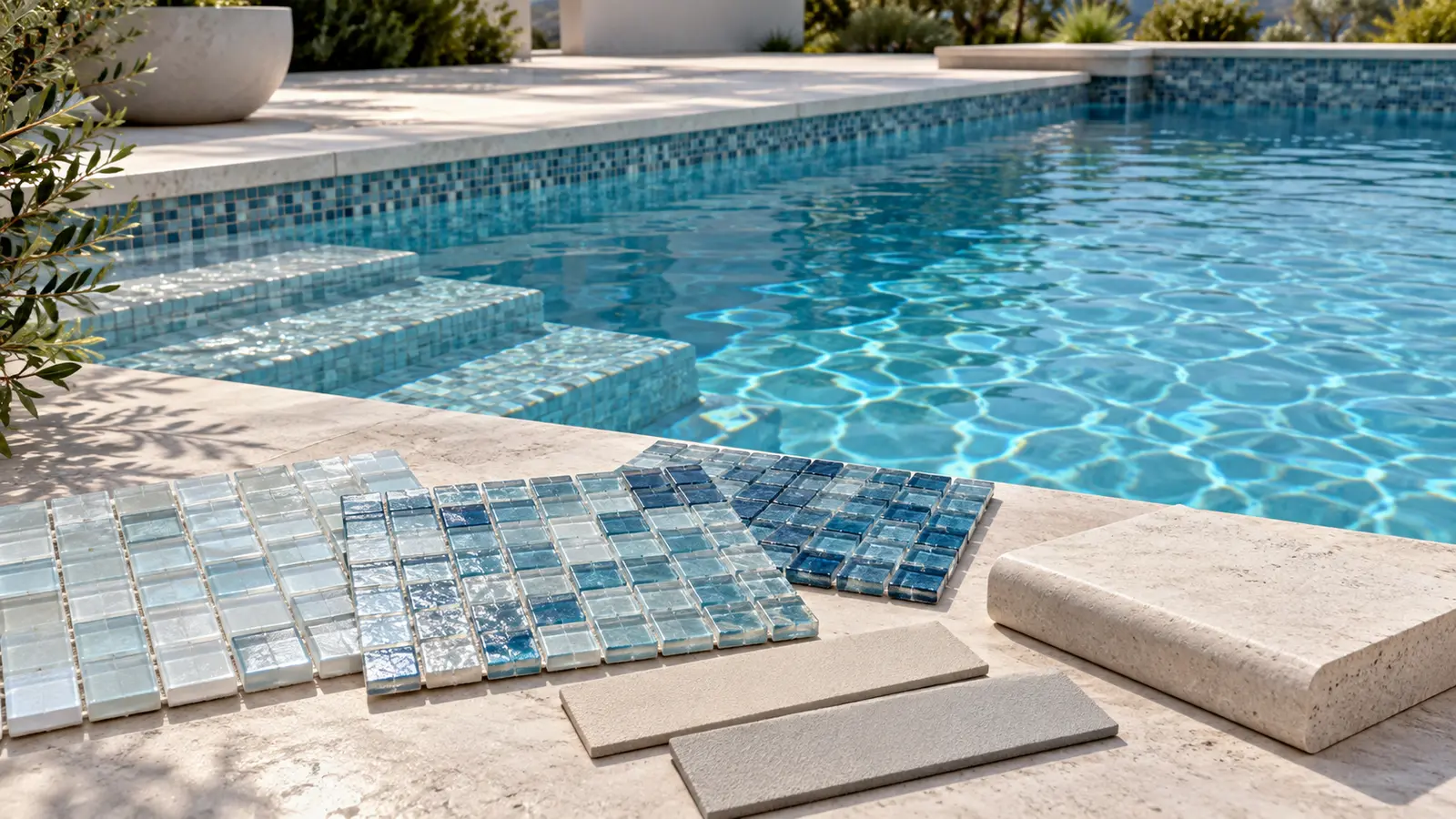
Planning example: a fictional villa pool renovation compares two pale glass-mosaic options. Dry samples look similar, but a small coordinated review shows that one produces a greener water impression beside the retained beige coping, while the other reads more neutral. The team also tests two joint colours and checks the selected format around a bench edge and waterline fitting. The client accepts the neutral option visually; the pool specialist separately confirms the product system, preparation and detail suitability. The labelled panel, product data and accepted photographs are added to the finish schedule before the order. This example is decision support, not an installation method, and the final system remains subject to survey, specialist design and manufacturer requirements.
Mock-up approval checklist
Use the checklist to make the review repeatable and to protect the distinction between aesthetic approval and technical responsibility.
- The existing substrate, repair and preparation assumptions are documented.
- Manufacturer, product code, format, colour and applicable batch information are identified.
- Joint or grout treatment and representative corners or edges are included.
- The finish is reviewed dry, wet and in relevant natural or artificial light where practical.
- Waterline, coping, steps, benches, fittings and covers are coordinated.
- Touch, care, product variation and owner maintenance information are discussed.
- Visual and technical approvals are recorded by the named parties.
- The labelled reference is retained through procurement and quality review.
Limitations and the next useful step
A mock-up is a comparison and quality reference; it does not prove the condition of the concealed pool shell, the success of waterproofing, hydraulic performance or the quality of the completed installation. Product colour on a website or photograph is also not a substitute for a current physical sample. The next useful step is to ask the appointed pool specialist for a finish-sample submission that includes product data, substrate assumptions, proposed junctions and the approval route. Review it beside the actual pool and retained materials, close all comments in writing, and only then authorise procurement or resurfacing work.
Sources & further reading
Make this useful for your project.
A review of your property and priorities can turn general guidance into a defined brief.
Explore Pool finishesDiscuss your project