A dry sample is only the start
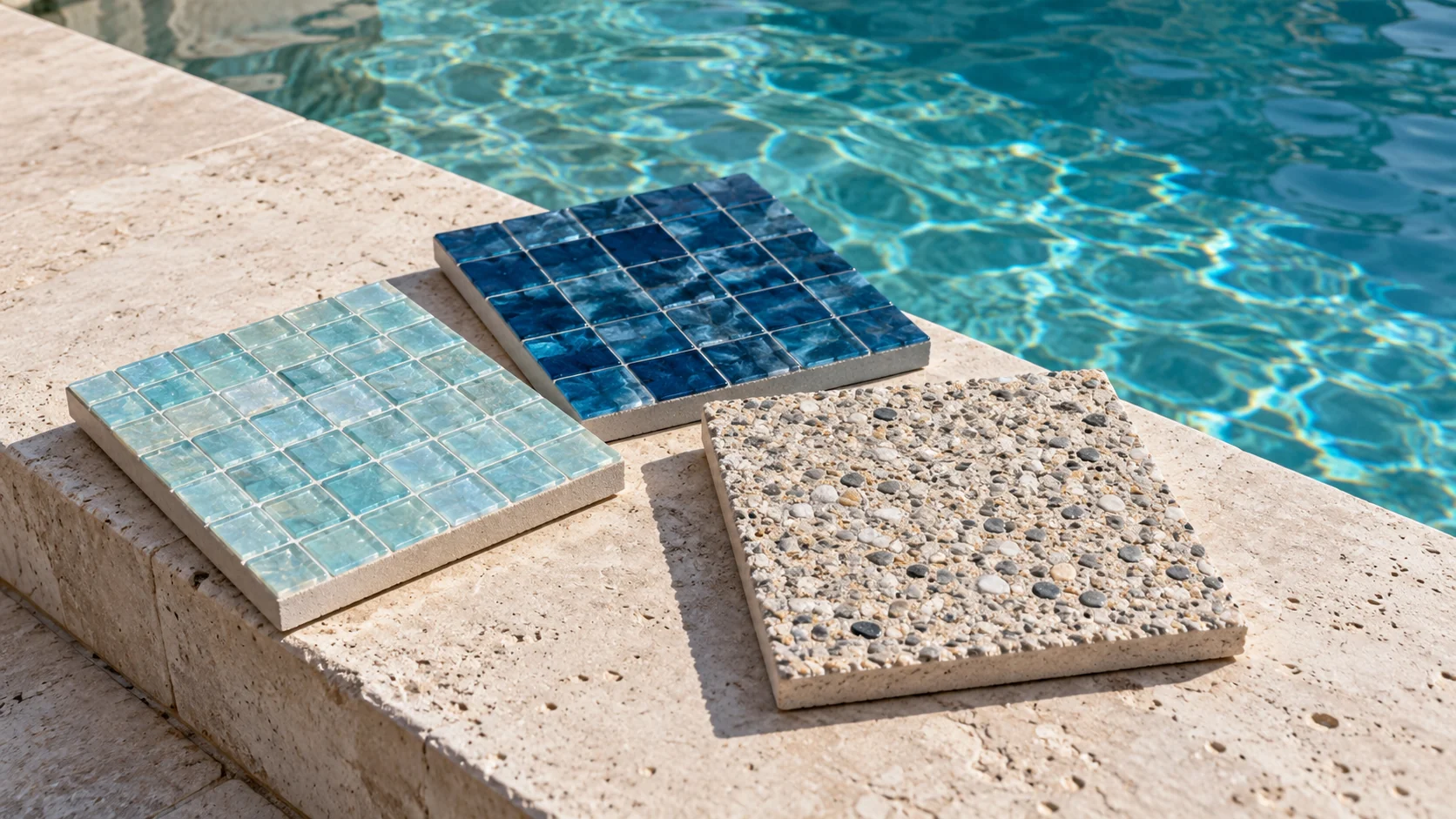
Choose a pool finish by reviewing how it is intended to look and feel in the actual pool, how it meets the waterline and edges, and what the specified system requires for installation and care. A small dry sample can narrow a palette, but it cannot reproduce water depth, sunlight, shade or the surrounding landscape. It also does not prove that the existing pool is ready to receive the proposed finish. Begin with the desired experience and a professional condition assessment, then ask for project-specific product information and properly defined samples. Treat colour, texture and technical suitability as connected decisions rather than choosing from a photograph alone.
Describe the appearance you want in water
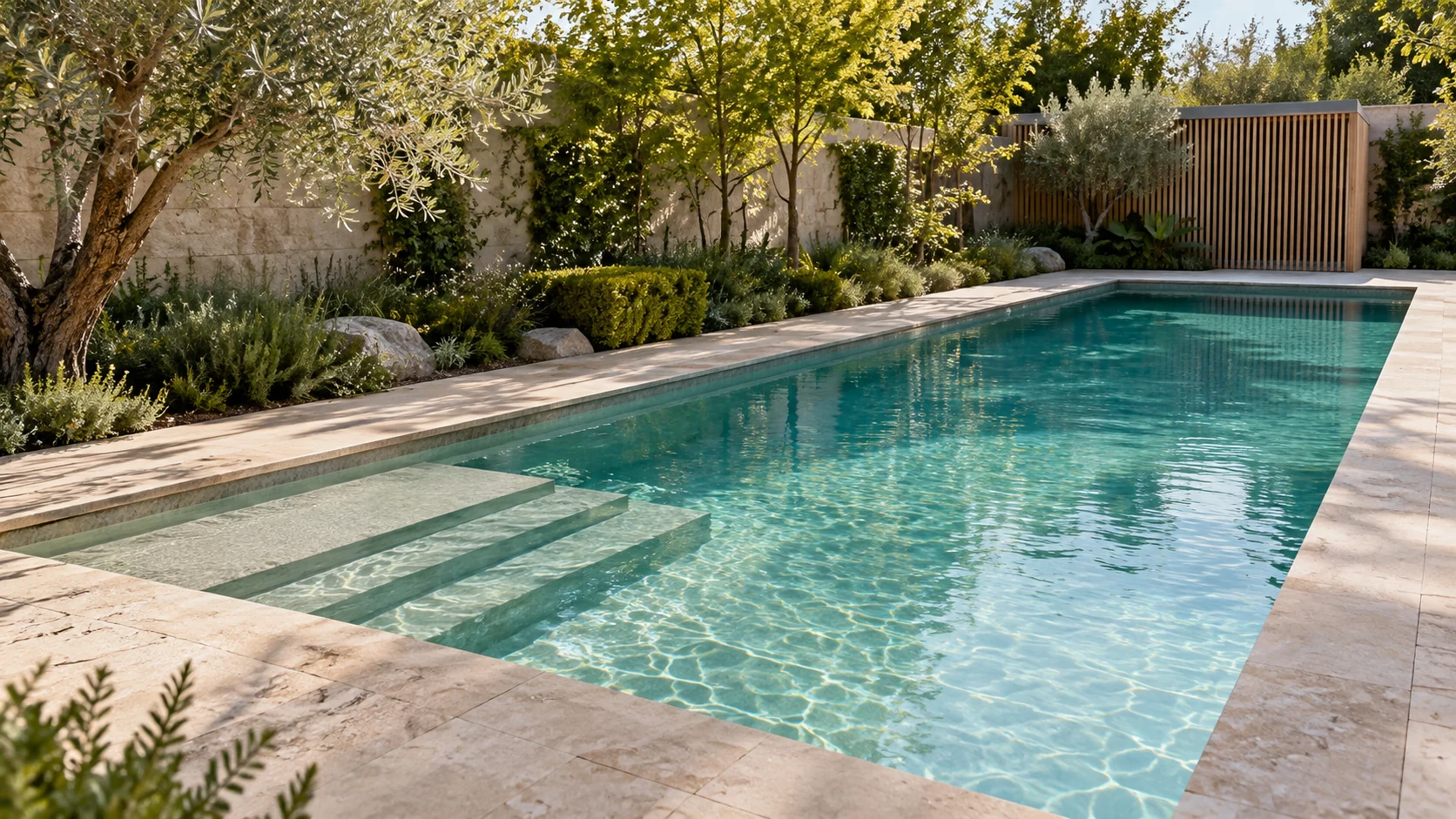
Use specific observations instead of asking simply for blue or resort-like water. Decide whether the owner prefers a pale, clear impression, a deeper tone or visible material variation. Note the times of day when the pool is most often seen and the important viewpoints from the house and garden. Include surrounding paving, walls and planting in the review because they form part of the visual setting. A photograph can help explain a direction, but record what feature matters in it. The same reference may appeal to one person for water colour and to another for the texture or landscape around it.
Expect water colour to vary with its setting
PebbleTec’s finish-selection guidance explains that water colour is influenced by the finish as well as pool depth, lighting, water chemistry and surrounding landscaping, and recommends comparing more than a swatch. Use that point as a review principle rather than a product endorsement. Ask the supplier for examples relevant to the shortlisted finish and recognise their limits. A photograph taken in another climate, depth or light cannot promise the result in a Dubai garden. Keep claims about the final appearance appropriately qualified and link the approved selection to the exact product or system proposed for the project.
Review texture where bodies and cleaning tools meet it
Discuss how the finish feels at steps, benches and other contact areas, and ask the supplier to explain the intended texture and product characteristics. A visual close-up does not describe the complete tactile experience. Where a representative installed reference is available through legitimate channels, ask what product, age and conditions it actually represents. Also review how the finish can be cleaned and maintained using the current manufacturer information. Do not infer comfort, slip characteristics or maintenance from aggregate size or gloss alone. Those questions require the exact system and competent project-specific assessment, particularly at transitions and walking surfaces.
Coordinate the finish with waterline, coping and fittings
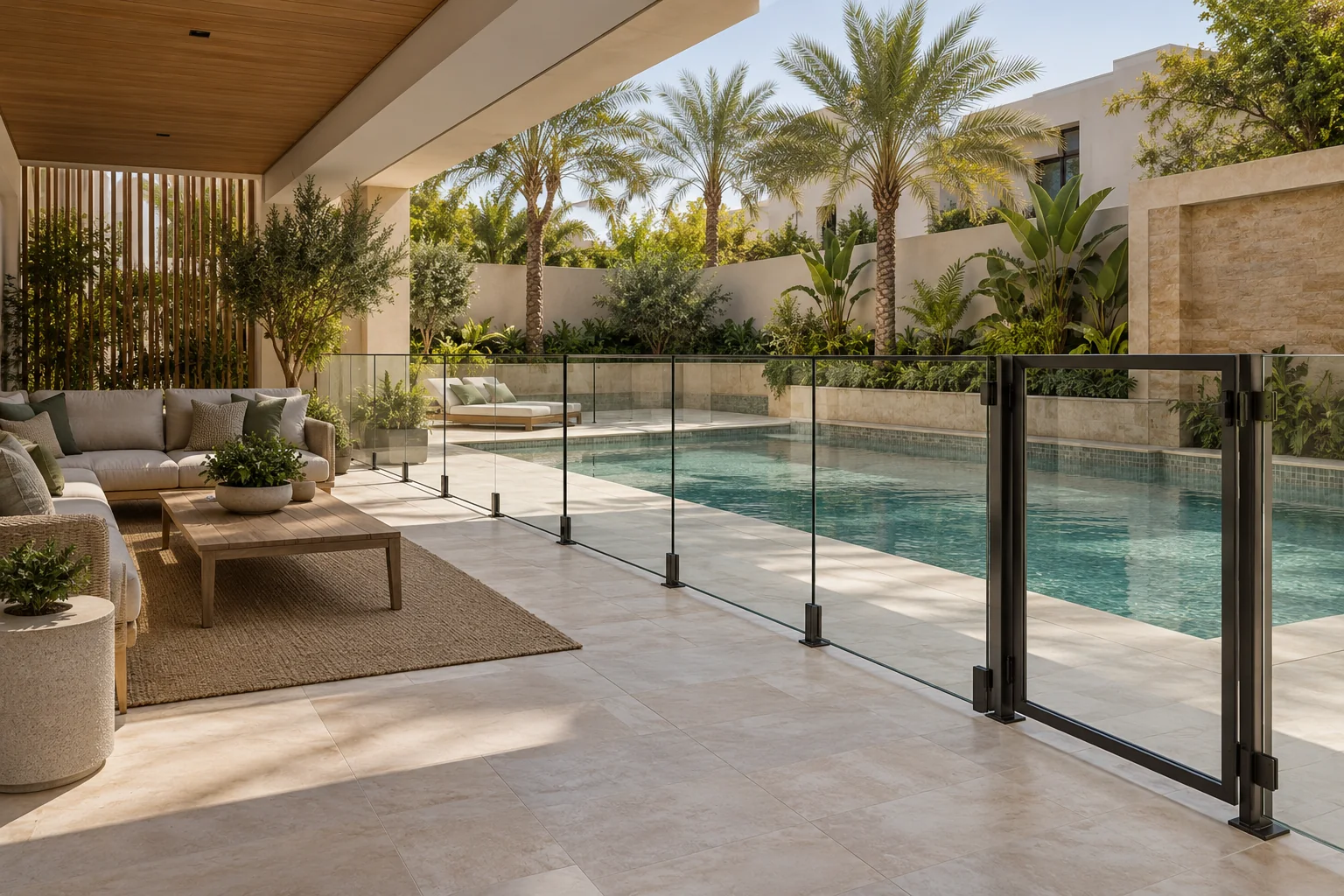
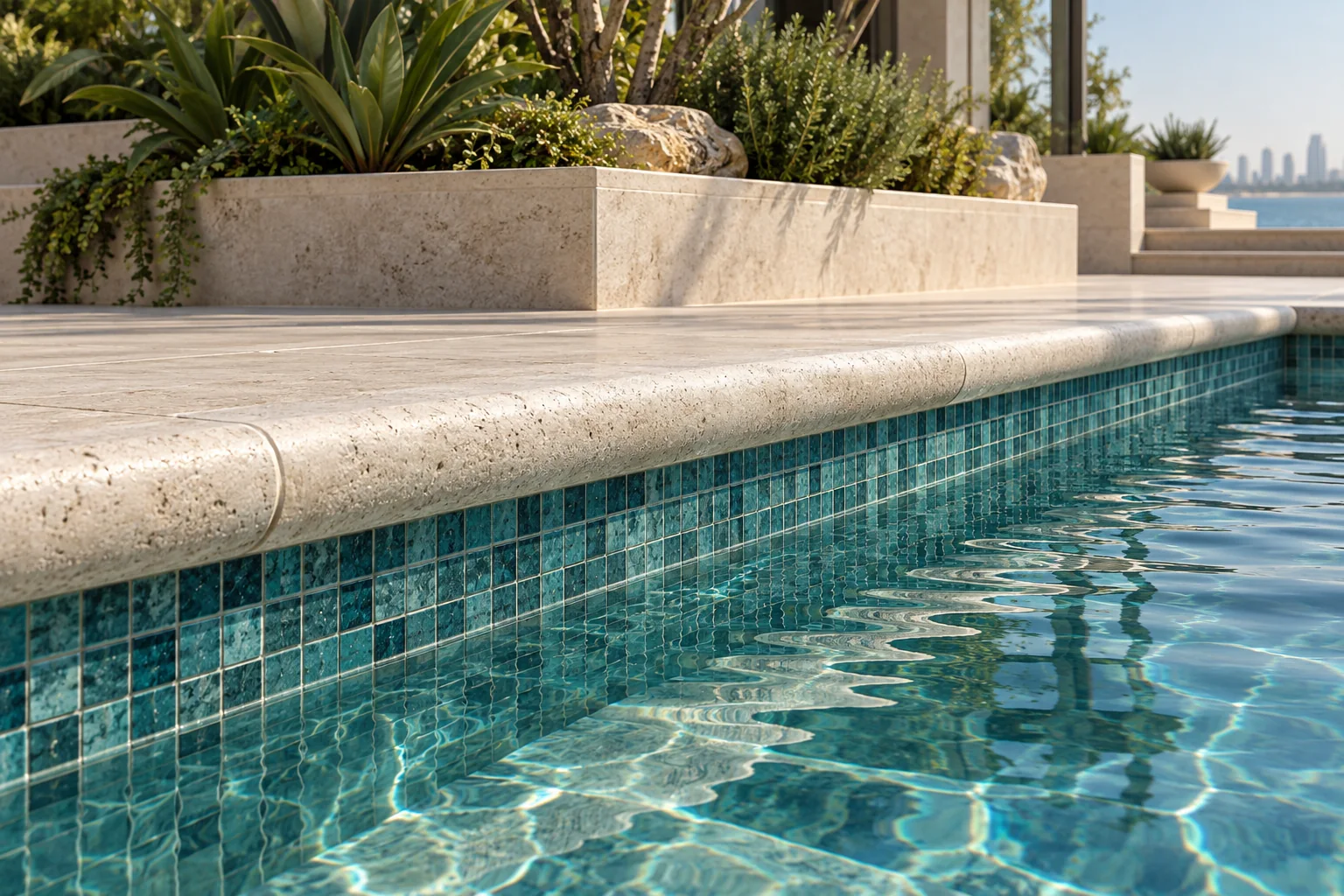
Place the finish sample beside the proposed waterline treatment, coping and adjacent terrace material. Ask for drawings or annotated elevations showing how edges, steps, fittings, drains and movement or construction joints are addressed by the responsible specialists. A successful palette can still be undermined by unresolved junctions. Clarify which components are retained during renovation and whether their condition or dimensions constrain the new finish. Do not use a decorative sample approval as permission to cover an unexplained crack, leak or surface symptom. The pool survey should identify what investigation and preparation must occur before a finish installation is accepted.
Planning example: a pale finish beside warm stone
Imagine a villa pool bordered by warm limestone and partly shaded in the afternoon. The owner initially selects a pale aqua sample from a digital image, expecting consistently bright water. During the review, the team compares the dry sample beside the actual coping and examines supplier examples under different light. The owner also considers a slightly deeper-toned alternative and asks how both finishes are specified at the steps and waterline. A condition survey remains separate and identifies preparation that must be resolved before resurfacing. The chosen direction is recorded with its expected variation rather than a guaranteed colour match. This Planning example does not claim a completed project, product performance or universal result; it shows how context changes a finish conversation.
Compare complete resurfacing scopes
Give bidders the same condition information and exact shortlisted finish where possible. Ask each proposal to identify investigation, preparation, the specified finish system, waterline and edge interfaces, protection, filling and commissioning responsibilities, and exclusions. Clarify who provides technical approval and what evidence or review points are required before concealed or irreversible stages proceed. A low total may omit investigation or assume that the existing substrate can be retained. A higher total may include work that another proposal keeps provisional. Do not compare the decorative finish rate alone. The owner needs to understand what creates a ready substrate and how completion will be demonstrated for the agreed scope.
Keep care and water management in the decision
Request the current start-up, water-management and care information for the actual selected finish and have the appointed pool professionals explain responsibilities. Do not improvise chemical dosing, surface treatment or commissioning from generic online advice. Ask who manages the pool through the relevant installation and start-up period, what records are provided and when the owner takes over normal operation. Keep product identity, colour reference and care information with the handover documents. Appearance changes or marks should be recorded and referred to the responsible specialist rather than diagnosed from a photograph. Finish selection is also a commitment to the documented care that supports the complete pool system.
A finish-review checklist and next step
Bring shortlisted finishes, pool photographs, surrounding material samples and any condition history to a specialist review. Ask for a selection record that states what the samples represent, what remains uncertain and what must be confirmed before ordering or installation. Use this checklist to keep appearance and technical scope together without turning the owner’s review into do-it-yourself construction advice.
- Identify the exact finish system, colour and intended pool locations.
- Describe the desired underwater appearance and important viewing times.
- Review supplier examples and physical samples with their limitations stated.
- Compare the finish beside waterline, coping and surrounding landscape materials.
- Discuss texture, contact areas and care using current product information.
- Keep condition investigation and substrate preparation separate from colour approval.
- Define professional review points, commissioning and owner handover responsibilities.
- Retain product references and approved samples with the completed pool record.
Sources & further reading
Make this useful for your project.
A review of your property and priorities can turn general guidance into a defined brief.
Explore our servicesDiscuss your project