Direct answer
Before renovation, a pool leak investigation should establish whether water loss is abnormal, when it occurs, which system or interface is most likely involved, and what remains uncertain. The output should be an evidence trail that connects observations and professional tests to a proposed repair scope. It should distinguish the vessel, waterline and penetrations from buried hydraulic lines, balance or overflow components and equipment. It should also record whether the pool is static or operating during each observation. The aim is not to promise certainty without opening-up; it is to reduce guesswork before finishes are removed or replaced.
Separate the symptom from the cause
A falling water level is a symptom, not a diagnosis. Weather, evaporation, bathing, backwashing, overflow operation and automatic top-up can distort the pattern. Record dates, water level, pool operating mode and relevant weather or use notes so the investigation has context. If an auto-fill masks the drop, consumption or controlled isolation may be more informative than casual observation. Testing and isolation should be led by pool professionals who can protect pumps, waterproofing, electrical systems and the structure while interpreting the result.
Investigate by system, not by guess
Organise the review into systems: shell and movement joints; fittings and penetrations; suction and return lines; overflow or balance arrangements; and plant-room equipment. Compare water loss with circulation on and off only through an agreed professional test plan. Look for relationships between the stabilised water level and a fitting or joint. Use suitable specialist methods where justified, then document what each test can and cannot rule out. A visible crack deserves attention, but its presence alone does not prove it is the active leak path.
- Vessel: shell, construction joints, movement joints and waterproofing interfaces
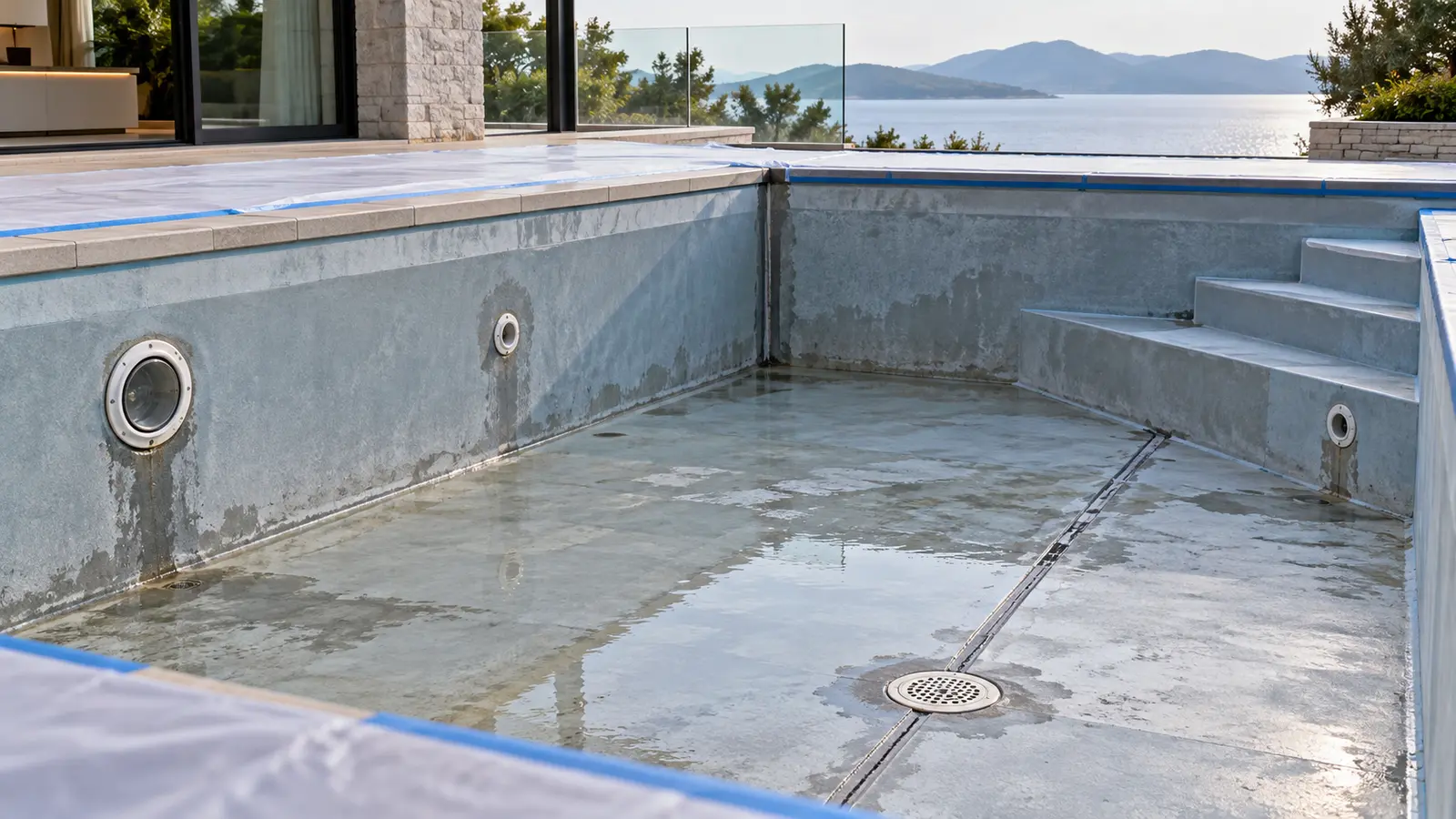
- Penetrations: lights, inlets, drains, skimmers and fixings
- Hydraulics: suction, return, overflow and make-up lines
- Plant: filters, valves, pumps, heat equipment and waste connections
- Surrounds: coping, deck interfaces and evidence of concealed moisture
Define evidence grades and decision gates
Not every finding has the same confidence. Label a result as observed, test-supported, probable or unconfirmed. Then create decision gates. A confirmed accessible equipment leak may lead directly to a defined repair. A probable concealed line defect may justify targeted specialist testing or local opening-up. A shell movement concern may require structural and waterproofing input before finishes are selected. This prevents the renovation quotation from bundling a broad allowance around an unexplained symptom.
Planning example
Planning example: a pool appears to lose more water when operating. The owner also sees dampness near one side of the deck, but no source is visible. The investigation records the operating pattern, reviews the plant and fittings, and uses a specialist-led sequence to compare systems. Evidence points toward a return-line zone, while the shell finish shows age but no test-confirmed active leak. The renovation scope therefore separates targeted opening-up and hydraulic repair from the optional finish renewal, with a hold point before reinstatement. This example explains a decision structure, not a diagnosis or a completed project; real testing must respond to the actual pool and competent professional advice.
Investigation brief and checklist
Give the investigator enough history to avoid repeating assumptions. Record when the issue began, any prior repairs, equipment changes, refill behaviour and whether loss varies with operation. Ask for a marked-up plan or photographs that locate observations and tests. The report should be usable by the renovation team, not only understandable to the person who performed the test.
- Pool type, overflow arrangement and current operating mode
- Water-loss observations with dates and relevant conditions
- Auto-fill, backwash, overflow and drainage behaviour
- Previous repair, finish and equipment history
- Systems tested, methods used and test limitations
- Evidence locations shown on drawings or photographs
- Likely causes ranked by confidence
- Recommended opening-up, repair boundaries and verification hold points
Limitations and safety boundaries
Leak investigation can require controlled isolation, specialist instruments, excavation or opening-up, and no remote checklist can make those actions safe or conclusive. Draining a pool can introduce structural, groundwater, finish and equipment risks; electrical and plant work also require competent professionals. Project-specific structural advice, product instructions, applicable codes and authority requirements take precedence. A negative test narrows the search but may not prove the absence of an intermittent defect. The report should state access restrictions and untested areas clearly.
Next step
Commission a written investigation brief before asking contractors to price the complete renovation. Require the result to distinguish confirmed repair work, provisional opening-up and optional finish renewal. Use hold points after exposure and after repair testing, before new waterproofing or finishes conceal the area. This gives quotations a shared evidence base and makes later scope changes easier to explain.
Sources & further reading
Make this useful for your project.
A review of your property and priorities can turn general guidance into a defined brief.
Explore Pool renovationDiscuss your project