The direct answer
Before selecting an automatic cover, survey the pool as a complete system. Check geometry, steps and ledges, water level, coping, deck space, roller position, electrical and control requirements, plant compatibility, drainage, access and maintenance. Then compare an above-ground roller with a recessed or submerged arrangement using the actual manufacturer's data. A cover can reduce debris and influence evaporation or heat loss, but its benefits depend on correct selection, operation and maintenance.
Define the reason for the cover
Set priorities before comparing mechanisms. The owner may want debris control, reduced evaporation, temperature retention, easier daily operation, a particular visual result or verified safety performance. These are not interchangeable claims. Ask the supplier to identify which functions the exact system provides, under what conditions and to which current standard or test. A cover must never be presented as a replacement for supervision or other required protective measures unless the applicable authorities and product documentation explicitly establish that role.
Survey geometry and interfaces
Record the pool's internal length and width at several points, corner radii, steps, benches, ladders, overflow details, skimmers, waterline and coping profile. Irregular shapes and projecting fittings can prevent a simple slatted cover from travelling correctly. An infinity edge or raised spa creates additional interfaces. The supplier should confirm measurement tolerances and suitable configurations. For a renovation, hidden structure and existing waterproofing may constrain any new recess or fixing.
Compare roller positions
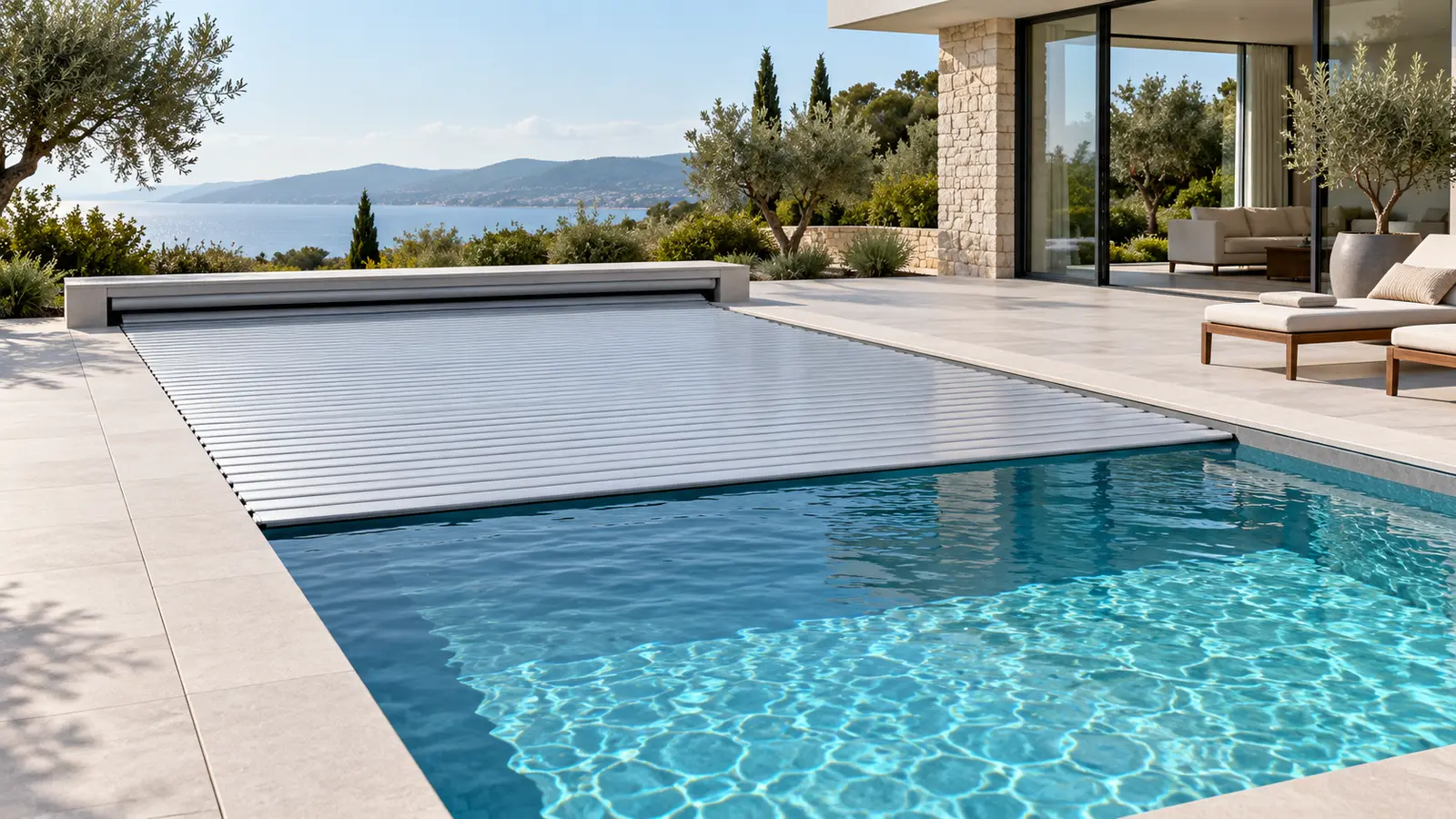
An above-ground roller is visible but may be simpler to add to an existing pool and can preserve the pool shell. A recessed or submerged roller can be visually quieter, yet needs dedicated space, access, structural and waterproofing coordination. Check where the cover stores, how the roller is reached for service and whether the housing affects swimming length or deck circulation. Product ranges differ, so use the selected model's installation manual rather than a generic detail.
Coordinate controls and water operation
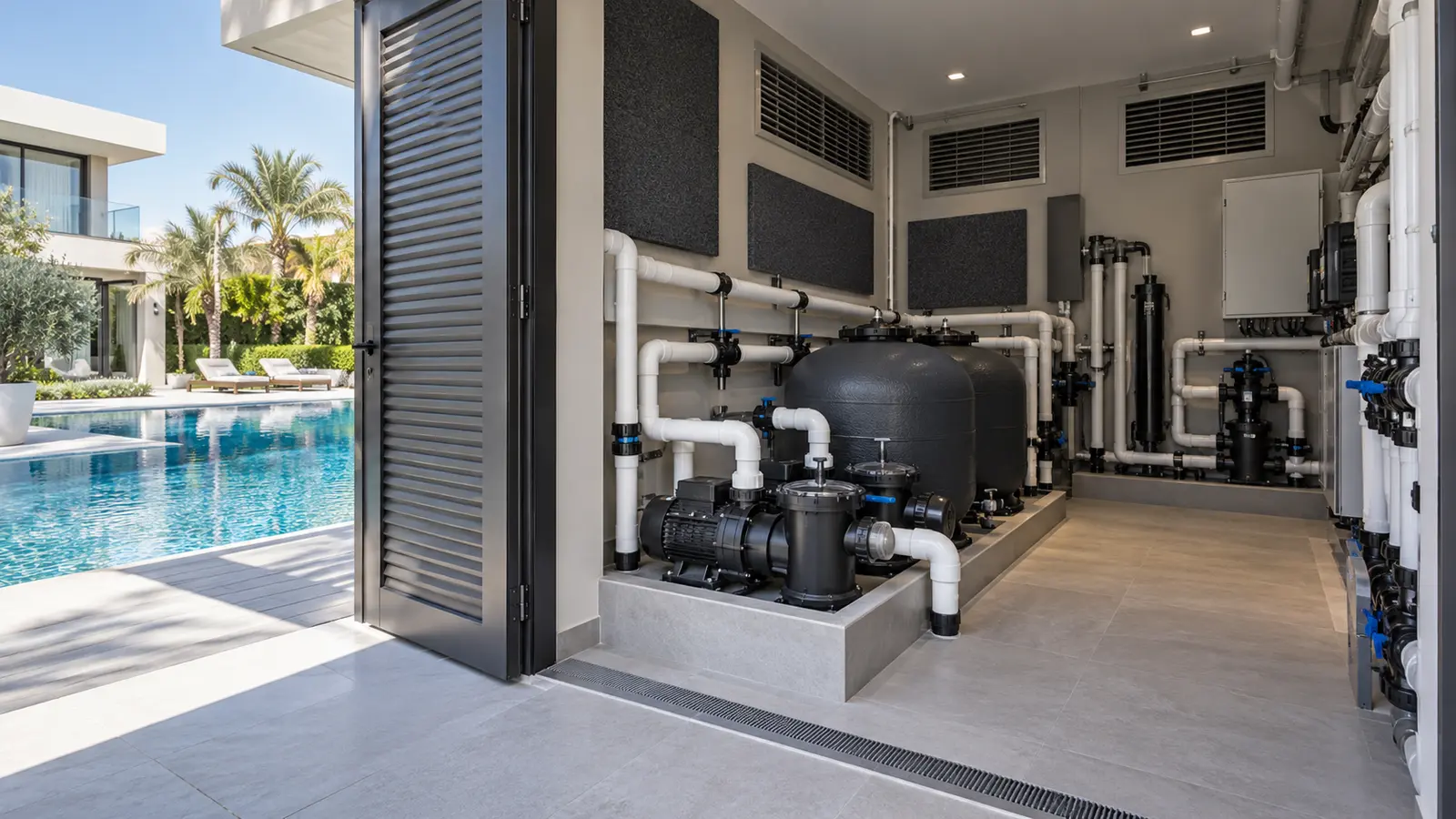
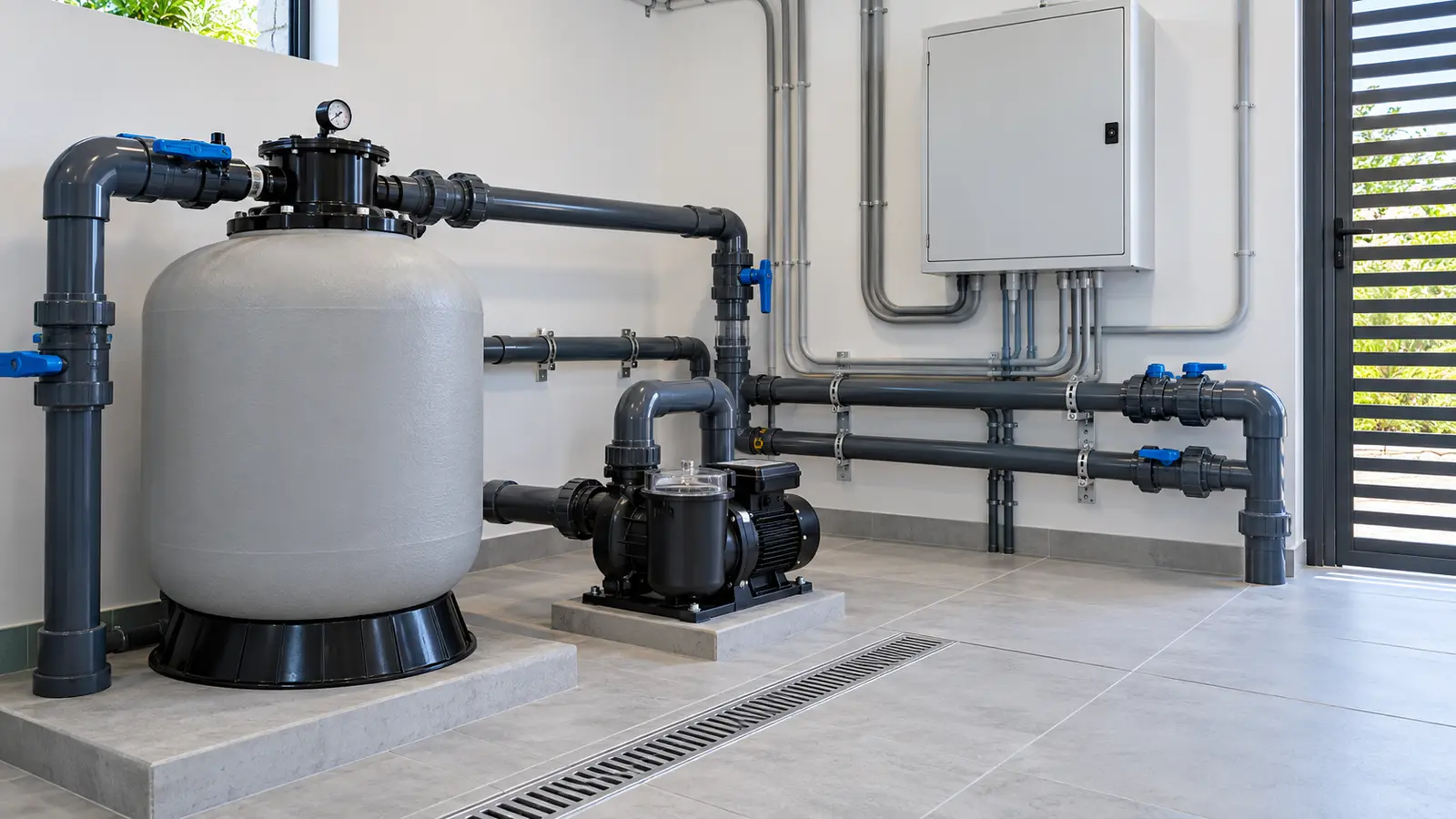
Automatic operation needs a defined control position, power provision, emergency procedure and clear view of the pool while the cover moves. If the system connects with treatment controls, the pool specialist should confirm the operating sequence. Water chemistry and circulation may behave differently when a pool remains covered for long periods. Record who commissions the interface, trains users and maintains the mechanism. Electrical and control work belongs to qualified specialists.
Compare lifecycle, not only appearance
Ask how the cover is cleaned, inspected, opened during a power interruption and repaired. Confirm which components remain accessible and whether a damaged slat, fabric section, motor or control can be replaced without major demolition. Review storage when the cover is open and the visual effect when it is closed. A lower initial disruption may be valuable in a renovation, while a more integrated system may suit a pool shell and deck already being rebuilt.
Planning example
Planning example: an existing rectangular pool appears suitable for a recessed cover, but the survey finds broad entry steps at one end and a narrow plant access route behind the other. The team compares a submerged system with an above-ground roller, checks the exact slat travel, preserves access to the plant room and keeps the operating key in full view of the water. The final choice is based on manufacturer review rather than appearance alone. This is an invented scenario; a real pool requires its own specialist survey and safety assessment.
The selection checklist
Keep product, construction and operational decisions in one schedule.
- Purpose and claimed performance defined
- Exact pool geometry and water level surveyed
- Steps, ledges, overflow and fittings recorded
- Roller and cover storage position agreed
- Coping, deck, structure and waterproofing interfaces reviewed
- Power, controls and emergency operation specified
- Plant and treatment compatibility checked
- Drainage and service access maintained
- Applicable safety requirements confirmed
- User training and supervision responsibilities recorded
- Cleaning, inspection and replacement access planned
- Supplier drawings approved before work
Limitations and a useful next step
This guide does not specify a safety system, electrical installation or structural alteration. Automatic covers contain moving and electrical components, and a retrofit can affect waterproofing, coping or pool operation. Use competent pool, electrical and structural specialists as relevant, confirm the applicable local requirements and follow the current manufacturer's documents. Next, commission a measured feasibility sketch showing two viable cover arrangements, their equipment space and maintenance access. Compare those before requesting a final product quotation.
Sources & further reading
Make this useful for your project.
A review of your property and priorities can turn general guidance into a defined brief.
Explore Pool equipmentDiscuss your project