Direct answer: compare system duty and interfaces, not model names alone
A pool-equipment replacement compatibility schedule should record the existing pool and plant, observed problems, verified hydraulic duty, selected replacement, pipe and valve interfaces, filtration and treatment relationships, electrical supply, controls and communications, ventilation and drainage, dimensions, noise, maintenance clearance, delivery route, testing and commissioning. It should identify which existing components remain and who verifies every interface. A replacement with a similar label or connection diameter is not automatically compatible. Dubai Municipality publishes current technical guidance and approval services for swimming-pool plans; the appointed pool specialist, engineers and relevant reviewing parties should determine what applies to the actual private or public pool.
Establish the existing-system baseline
Survey the pool volume and use, outlets and inlets, balance tank where present, pumps, filters, heating or cooling, treatment, dosing, controls, valves, pipe sizes, electrical panels, drainage and plant-room conditions. Record nameplates and model information but do not assume that the current installation was correctly selected or still performs as intended. Note pressure readings, noise, leaks, corrosion, air ingress, recurring alarms and maintenance history where reliable records exist. Identify hidden or inaccessible pipework as an uncertainty. The baseline should distinguish a failed component from a wider system problem; replacing the visible symptom without investigation can reproduce the same operating difficulty.
Define the required duty before comparing products
The pool specialist should calculate and document the design duty using the verified pool, pipework, filtration, treatment and operating requirements. The schedule then compares candidate equipment at that duty rather than at headline maximum values. Check how a variable-speed pump, different filter or revised treatment component affects the rest of the system and its controls. Where operating goals change—quieter running, different hours, heating integration or a new cover—state them explicitly. Do not present flow, pressure or chemical settings as homeowner instructions. These are professional design and commissioning decisions with safety, water-quality and equipment consequences.
- Verified pool and operating brief
- Design hydraulic duty
- Filter and treatment relationship
- Operating modes and control intent
- Performance and noise objectives
Check physical, electrical and control interfaces
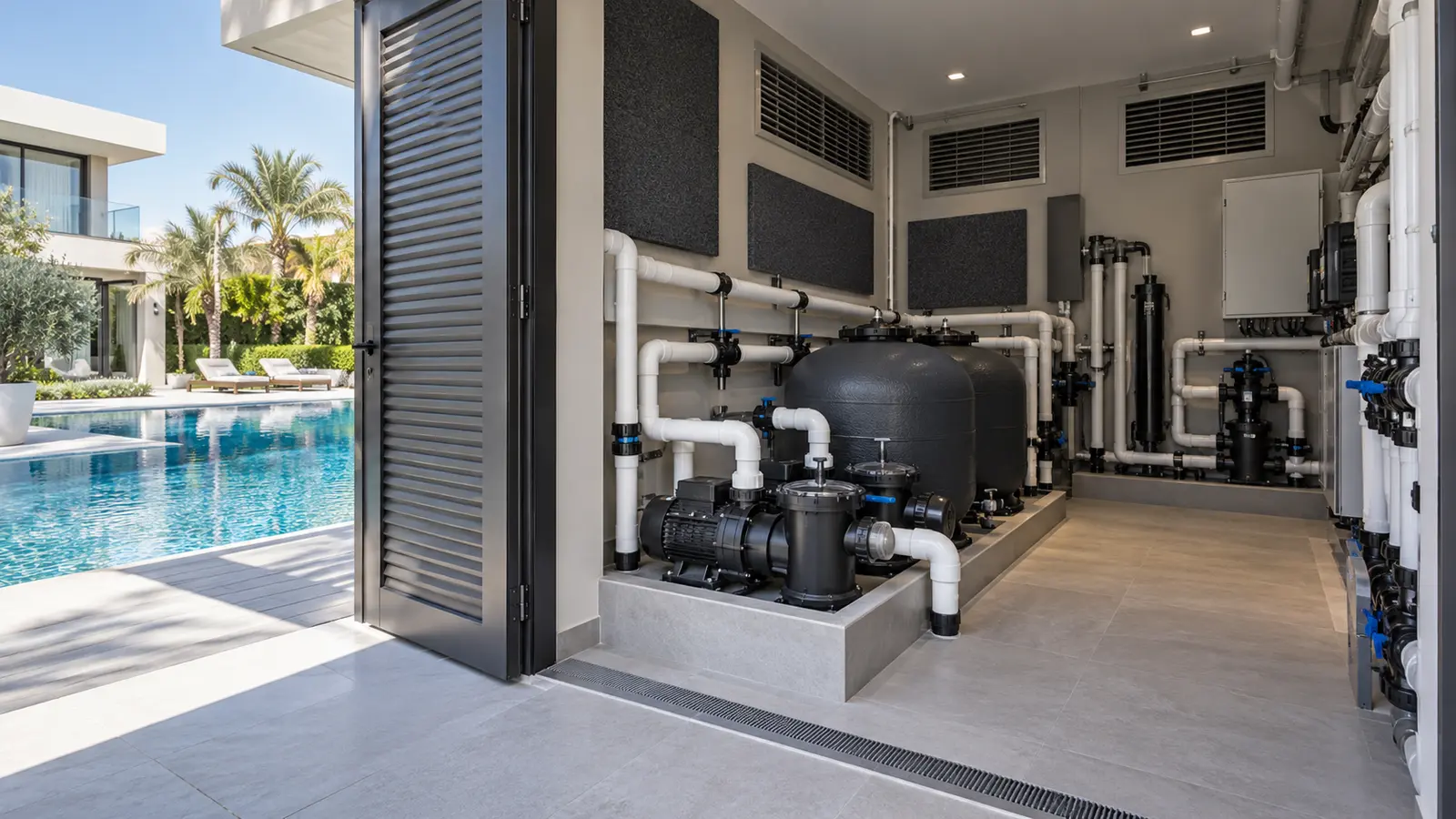
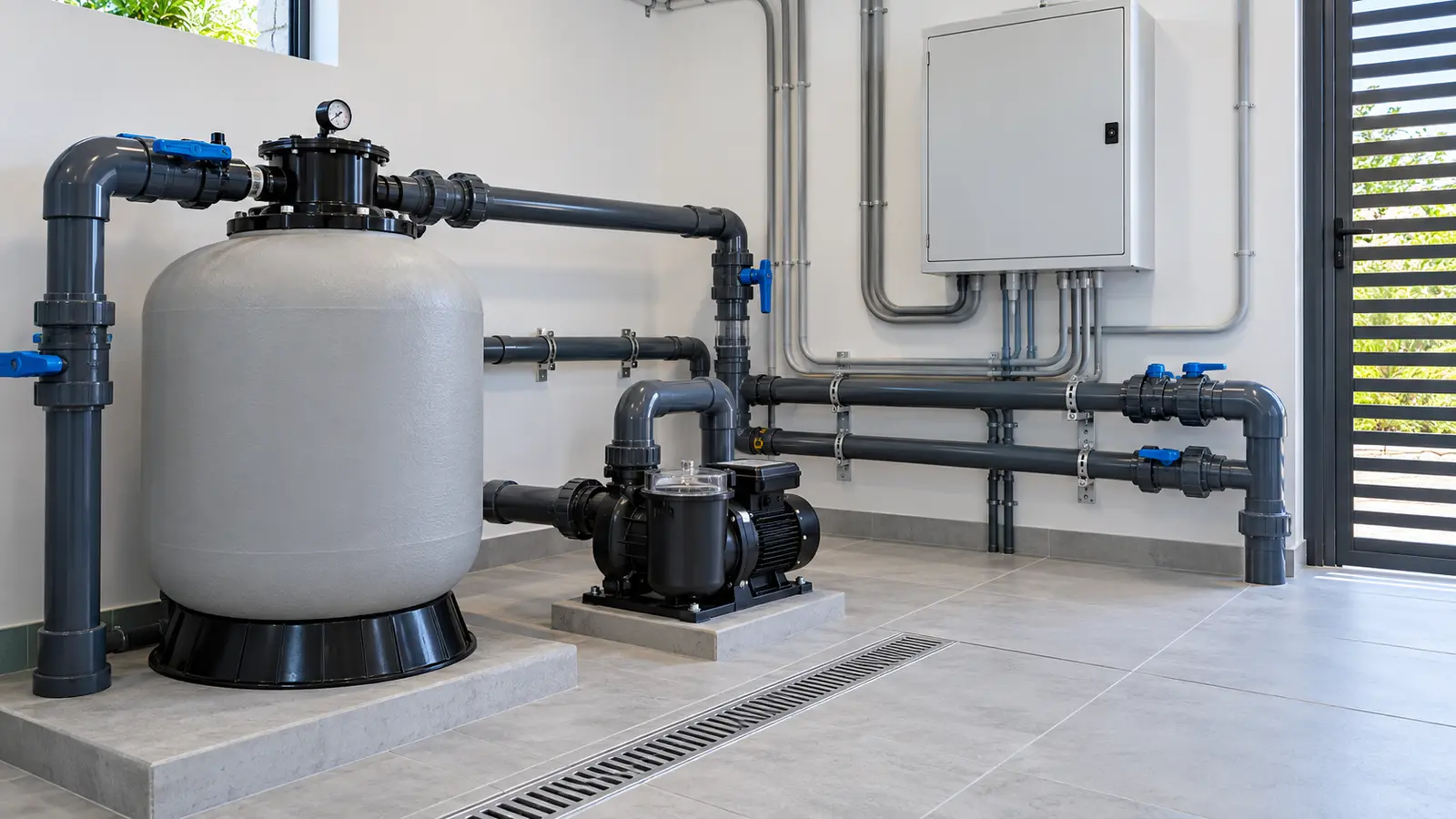
Draw the proposed equipment at real dimensions with unions, valves, service zones and removal paths. A compact-looking replacement may need more clearance for a lid, motor or filter media. Confirm base and support, pipe alignment, allowable reducers, drainage, ventilation and protection from weather or flooding. The electrical designer and qualified contractor must verify supply, protection, isolation, earthing and control interfaces from current product data. If automation is retained, record protocols, sensors, relays and fail-safe behaviour that require confirmation. Avoid adapters and site improvisation that conceal an unresolved selection mismatch. Every changed interface should have an owner and approval status in the schedule.
Coordinate treatment, materials and maintenance
Replacement decisions can affect water treatment, compatible materials and maintenance routines. Record the retained sanitation and dosing arrangement, sampling or monitoring points, chemical compatibility information from manufacturers and the responsibilities of qualified operators. Keep chemicals outside the image and the article’s procedural scope; storage, dosing and handling require specific professional and regulatory controls. Check whether the selected equipment can be isolated, opened and removed safely within the plant room. Confirm availability of consumables and service support without making warranty or partnership claims. A product that fits the pipework but cannot be maintained through the access door is not a viable replacement.
- Retained treatment system identified
- Material compatibility reviewed
- Sampling and control interfaces recorded
- Consumables and service access checked
- Safe isolation and removal planned
Planning example
Planning example: a villa pool has a noisy ageing pump and a filter with recurring pressure issues. A like-for-like pump is proposed from the existing connection size. The compatibility survey finds that the filter condition, restrictive valve arrangement and plant-room drainage also need assessment. The specialist establishes the required duty, selects coordinated pump and filter options, and checks electrical and control changes. A revised layout provides straight service access and room to open the filter while retaining suitable valves. The owner approves the documented operating objectives rather than a model number alone. Installation is then tested and commissioned against the approved schedule, with settings and maintenance information handed over by the responsible professionals.
- Symptoms trigger a system review
- Selection follows verified duty
- Layout includes real maintenance space
- Electrical and control interfaces are assigned
- Commissioning closes the replacement
Pre-order checklist and limitations
Use this checklist before procurement. It does not calculate pool hydraulics, select treatment, set chemical levels or provide installation instructions. Pools combine water, electricity, pressure and controlled chemicals; design, construction and commissioning belong to appropriately qualified specialists. Current Dubai Municipality guidance, approvals, community rules and manufacturer requirements may vary by pool type and scope. Existing drawings can be incomplete, and concealed pipe condition may only become clear during approved work. Keep assumptions visible and allow the specialist to revise selection when evidence changes.
- Existing-system survey complete
- Problem and operating goals agreed
- Design duty professionally verified
- Physical and hydraulic interfaces checked
- Electrical and controls review closed
- Maintenance and delivery access confirmed
- Testing, commissioning and handover assigned
Next step: approve the schedule with the plant-room layout
Issue the compatibility schedule together with the existing survey, revised plant-room plan, equipment data, interface notes, electrical and controls review, commissioning requirements and responsibility matrix. Ask the pool specialist, relevant engineers, supplier and installer to close comments against one revision before orders are placed. On delivery, verify model and data against the approved schedule before installation. Retain pre-replacement readings and commissioning records so the approved team can compare intended and actual operation, investigate differences and give the owner a clear baseline for future servicing. This process does not make replacement risk-free, but it prevents the common mistake of treating one pump, filter or controller as an isolated purchase when it is part of a connected water-treatment and operating system.
Sources & further reading
Make this useful for your project.
A review of your property and priorities can turn general guidance into a defined brief.
Explore Pool equipmentDiscuss your project