The direct answer
A Dubai villa pool needs heating, cooling, both or neither according to a defined use and temperature brief—not a generic climate assumption. State who swims, which months and hours matter, the comfortable temperature range they expect, how quickly the pool should recover, and whether a cover or shade strategy is acceptable. Then record the measured pool, exposure, existing hydraulics, plant space, electrical capacity, noise constraints and maintenance approach. A pool specialist can use that information to compare feasible systems. Select equipment only after performance assumptions, interfaces, responsibilities and current requirements are checked for the specific property.
- Define the desired swimming season and hours
- Record exposure and existing system condition
- Compare whole systems, controls and operating responsibilities
Write the swimming-use brief
Separate occasional preference from the conditions that genuinely affect use. Record adults, children and any users with particular comfort or accessibility needs, while leaving medical advice to qualified professionals. Note weekdays, weekends, mornings, evenings and periods when the villa is vacant. Decide whether the goal is extending the shoulder seasons, supporting early-morning exercise, moderating peak summer discomfort or maintaining a narrow temperature continuously. Avoid promising a universal target in the brief. Instead, agree a project-specific operating band and identify who may adjust it. This keeps the equipment discussion connected to real use rather than to maximum capacity alone.
- Months and times of intended use
- Typical and peak users
- Comfort expectation
- Recovery expectation
- Vacancy and supervision routine
Build an evidence base from the existing pool
For a renovation, gather measured information before specifying a change. Record pool dimensions and water features, circulation arrangement, current plant, visible condition, operating schedule, shading, nearby planting and equipment location. A short temperature log across representative times can be useful when interpreted by the specialist, but it should not substitute for design calculations. Review current utility information and maintenance records where available. Check whether poor comfort is being caused by exposure, control settings, hydraulic faults or an equipment problem rather than assuming a new heating or cooling unit is the first answer.
- Measured pool and connected water features
- Sun, shade and wind exposure
- Existing plant and controls
- Maintenance and fault records
- Representative operating observations
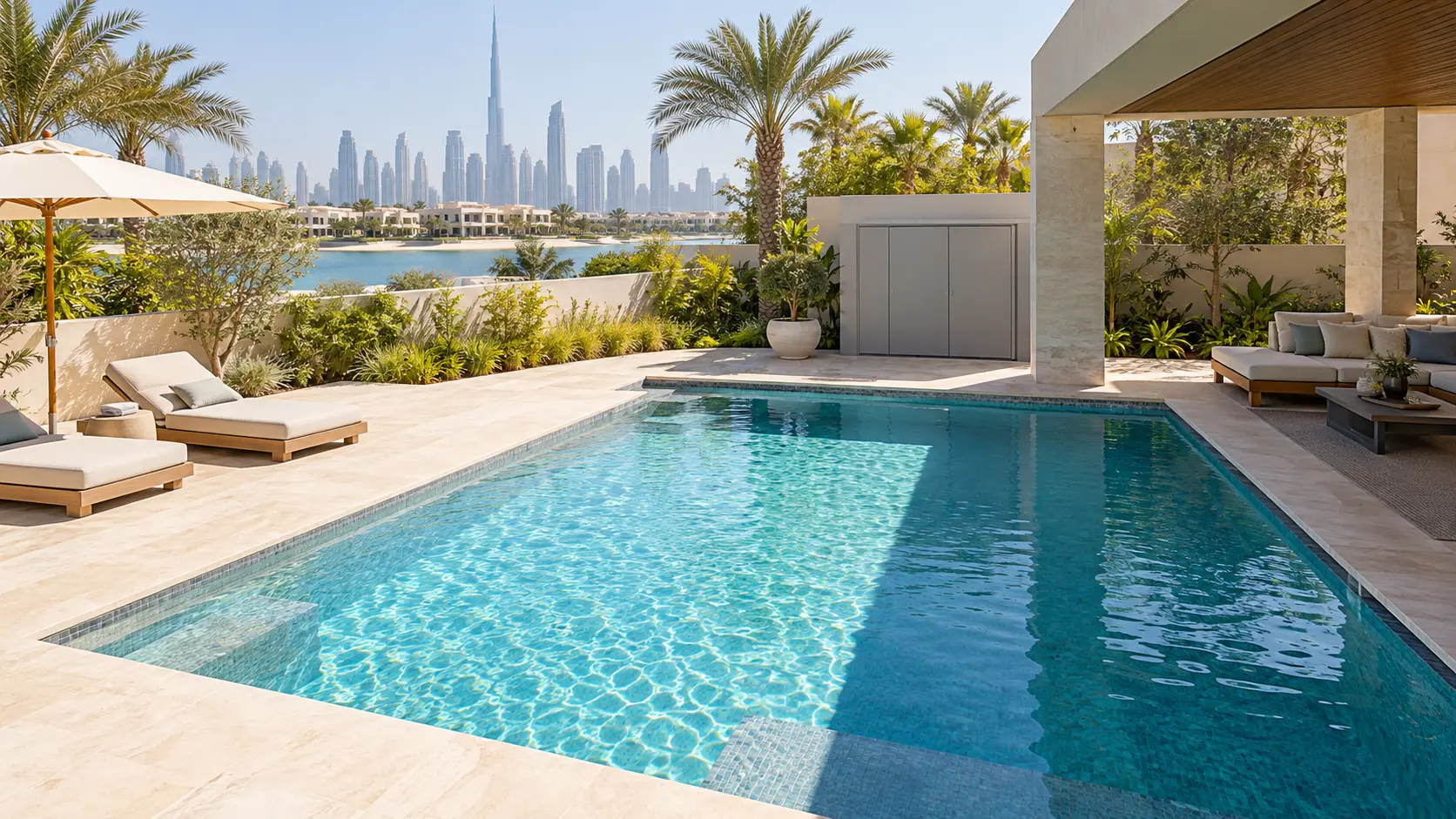
Compare passive and active decisions together
Shade, covers, operating hours and surrounding design can affect the temperature brief, but each has other consequences. A cover needs safe storage, handling, maintenance and compatibility with the pool’s safety strategy. Shade can change the terrace experience, planting and debris pattern. Active equipment introduces plant space, air or water flow, power, controls, noise and maintenance requirements. Do not treat these as isolated add-ons. Compare combinations against use, safety, appearance and operation. Dubai Municipality’s private swimming-pool safety guidance should be reviewed in the current project context, and any enclosure or safety device must remain properly coordinated by the appointed professionals.
Brief performance without inventing capacity
Ask the pool specialist to state the design assumptions behind each option: pool data used, target condition, reference ambient conditions, operating hours, expected response, hydraulic interface and control logic. Record what the proposal does not cover. Manufacturer figures should be current and interpreted for the project rather than copied from a different pool. Compare normal operation, peak demand, partial-load behaviour and standby. If heating and cooling are both proposed, confirm how the controls change mode and prevent conflicting operation. Equipment selection, hydraulic design and electrical design are specialist work; this guide does not provide sizing or installation instructions.
- Design inputs and target condition
- Expected operating pattern
- Hydraulic and electrical interfaces
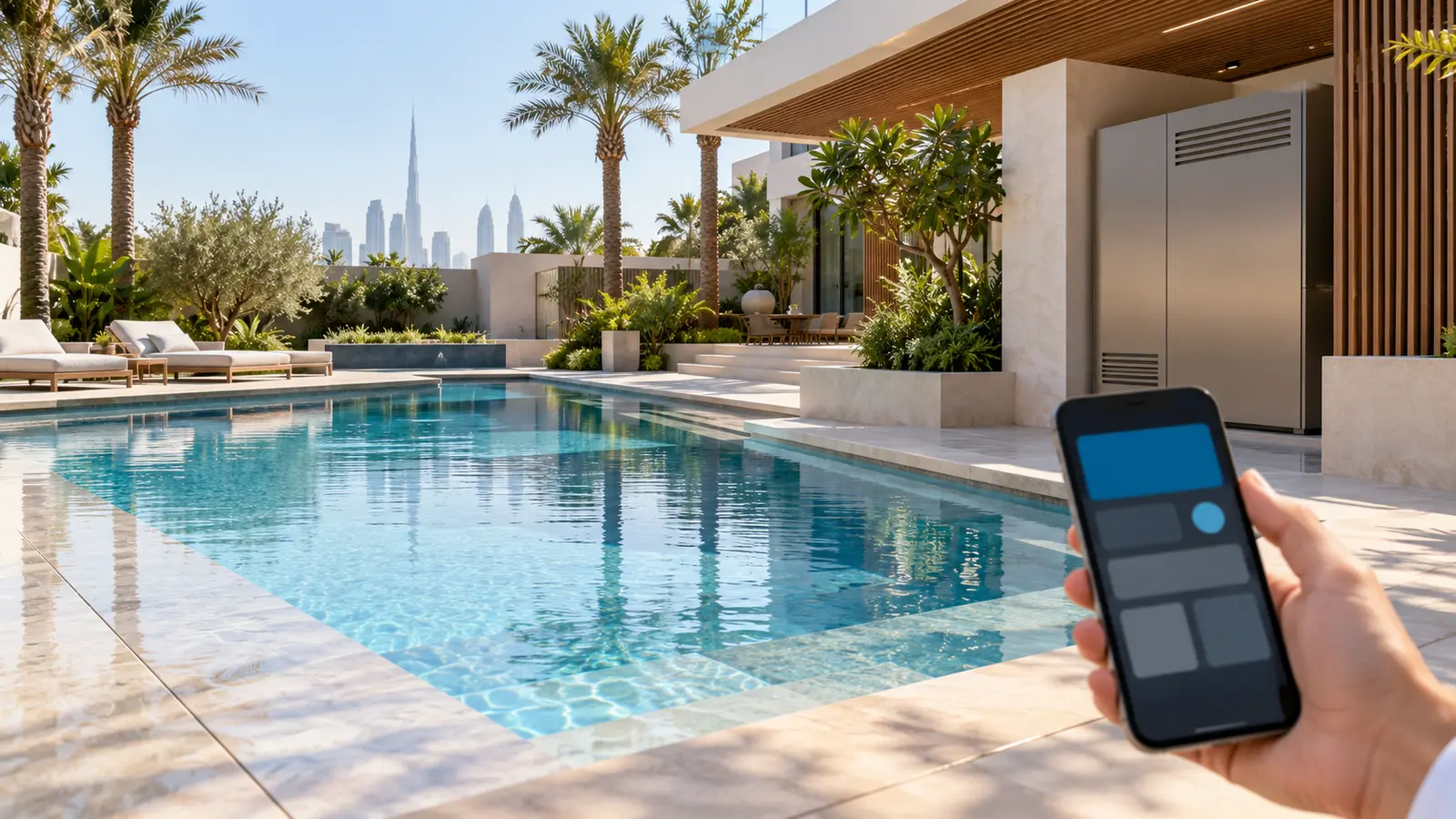
- Control and mode-change logic
- Exclusions and verification responsibility
Coordinate plant space, access and neighbours
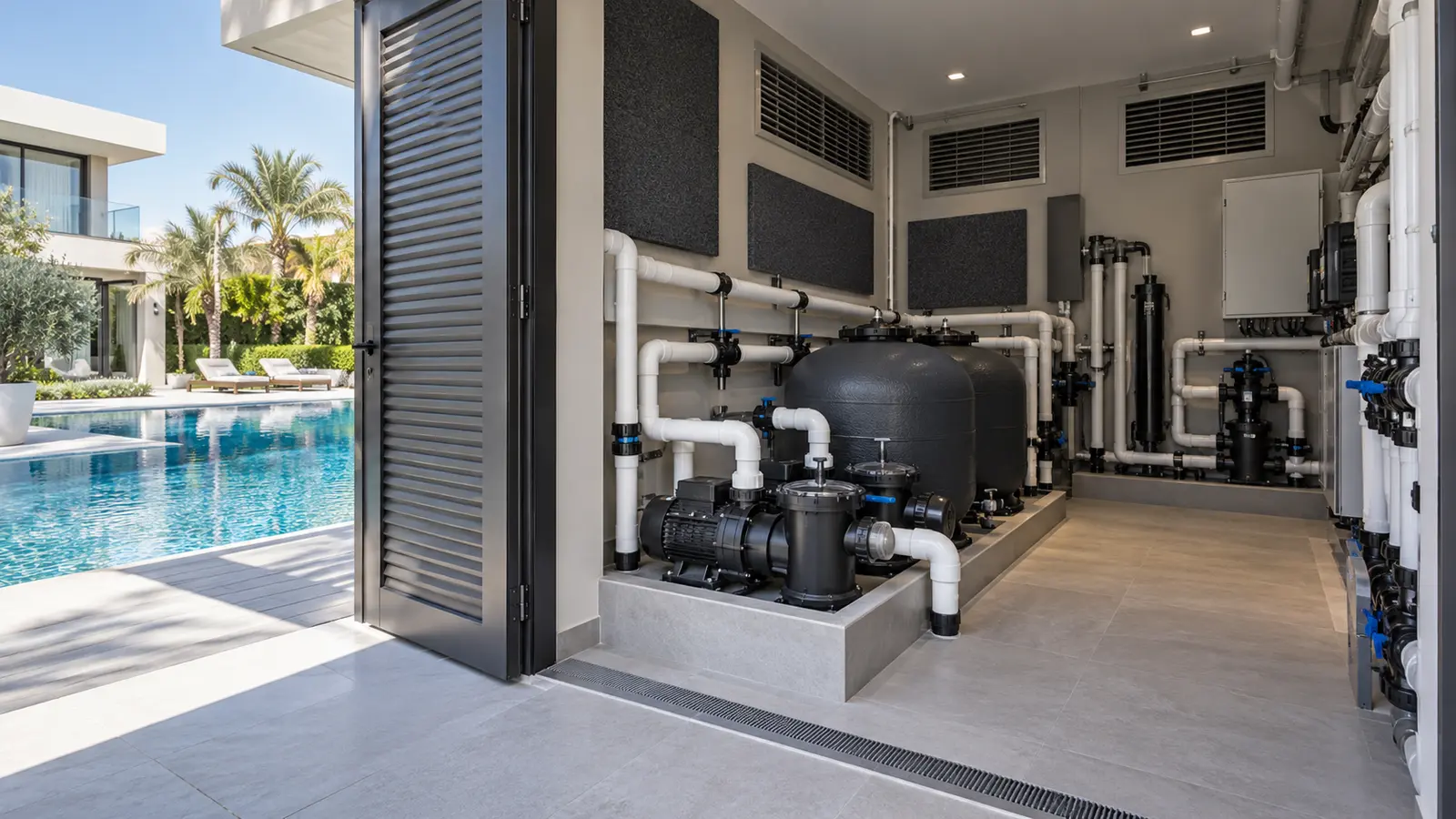
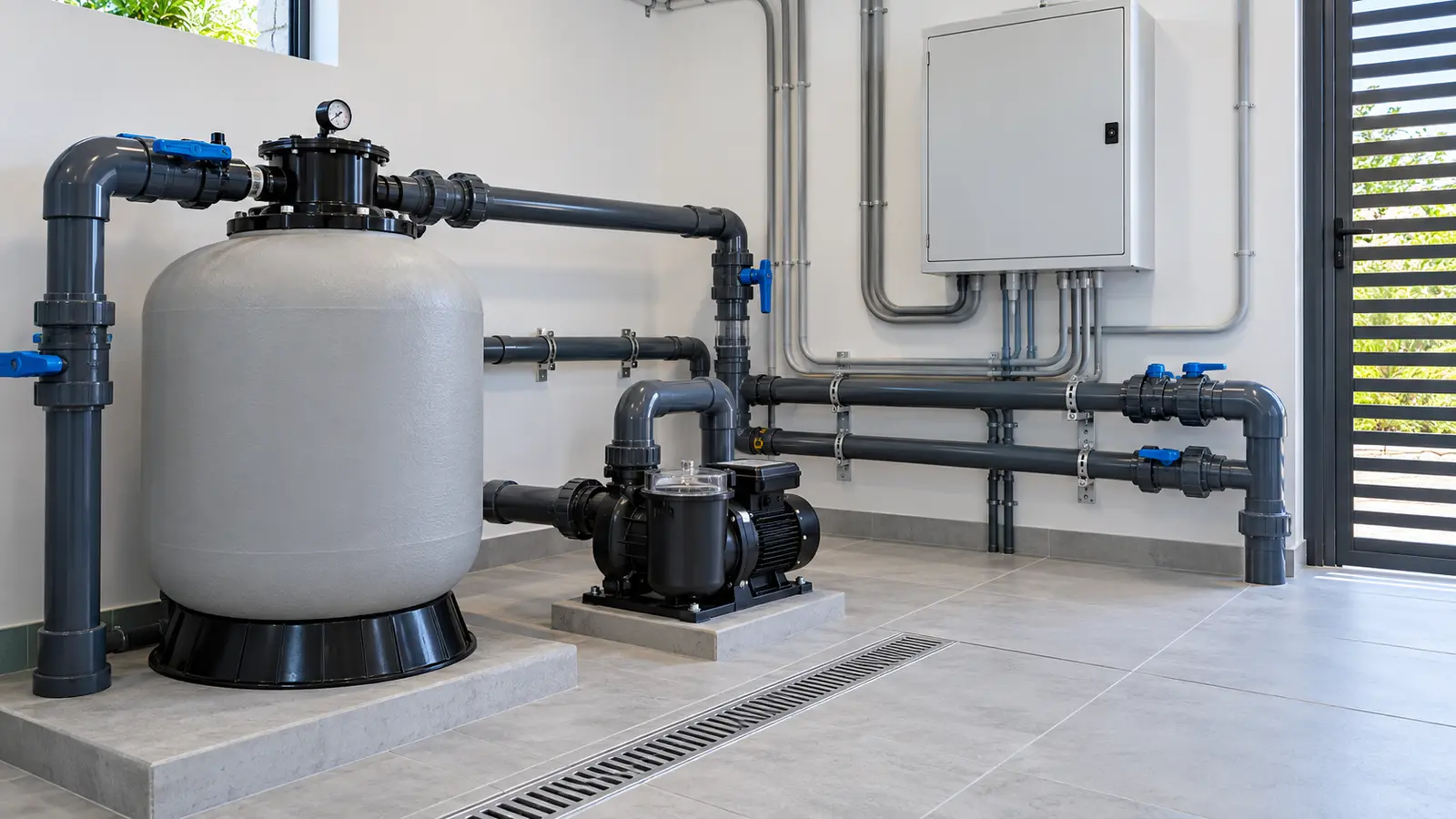
Show the selected equipment at its real dimensions with service clearances, air path, drainage, pipe routes, cable routes and control location. Confirm how it enters the property and how it can later be removed. Consider noise and airflow at bedrooms, terraces, neighbouring boundaries and enclosed plant spaces, then obtain the appropriate specialist assessment. Keep the plant area secure and separate from unsupervised access. Do not conceal equipment so tightly that inspection, cleaning or safe isolation becomes difficult. If the renovation changes power demand or electrical installation, the relevant professionals should review current DEWA requirements and the property’s available capacity before procurement.
- Real equipment dimensions
- Ventilation and heat rejection
- Service and replacement access
- Noise-sensitive locations
- Drainage, pipe and cable routes
- Secure control access
Planning example
Planning example: a fictional family uses its shaded villa pool on early mornings from October through May and occasionally on summer evenings. The first enquiry asks for the largest reversible unit available. The design team instead logs the use pattern, measures the pool and shade, surveys the existing circulation and reviews plant access and electrical information. The options compare a focused seasonal heating strategy with a reversible system, plus the operational effect of a compatible cover. The family can then judge comfort, controls, space and maintenance against actual use. The example does not state capacities or promise temperatures; final selection and approval remain with the appointed specialists.
Commissioning and operating checklist
Define how the completed system will be inspected, tested and handed over. The commissioning record should state settings, sensor checks, flow and control verification, safety interfaces, operating modes and the conditions during the test, prepared by the responsible parties. The owner needs a practical operating and maintenance explanation, warranty information and a clear contact route for faults. Dubai Municipality guidance places importance on appropriate design, safety requirements, operation and maintenance; the project team should confirm what applies to this private pool. The next step is a site survey and written temperature-control brief before requesting comparable specialist proposals.
- Use and temperature brief agreed
- Pool and existing plant surveyed
- Options compared on the same assumptions
- Plant space and services coordinated
- Safety strategy preserved
- Commissioning method defined
- Operation and maintenance handover included
Limitations
This guide cannot determine the required capacity, equipment type, hydraulic design, electrical supply, noise treatment, water chemistry, safety measures or approval route for a specific pool. These depend on the property, pool, users, equipment and current regulations. Pool, electrical and structural work should be designed and carried out by appropriate qualified specialists. Do not alter plant or regulated services as a do-it-yourself task, and do not rely on a concept image or editorial example for construction. Verify current product data and authority requirements before ordering or modifying the installation.
Sources & further reading
Make this useful for your project.
A review of your property and priorities can turn general guidance into a defined brief.
Explore Pool equipmentDiscuss your project