Show the complete system
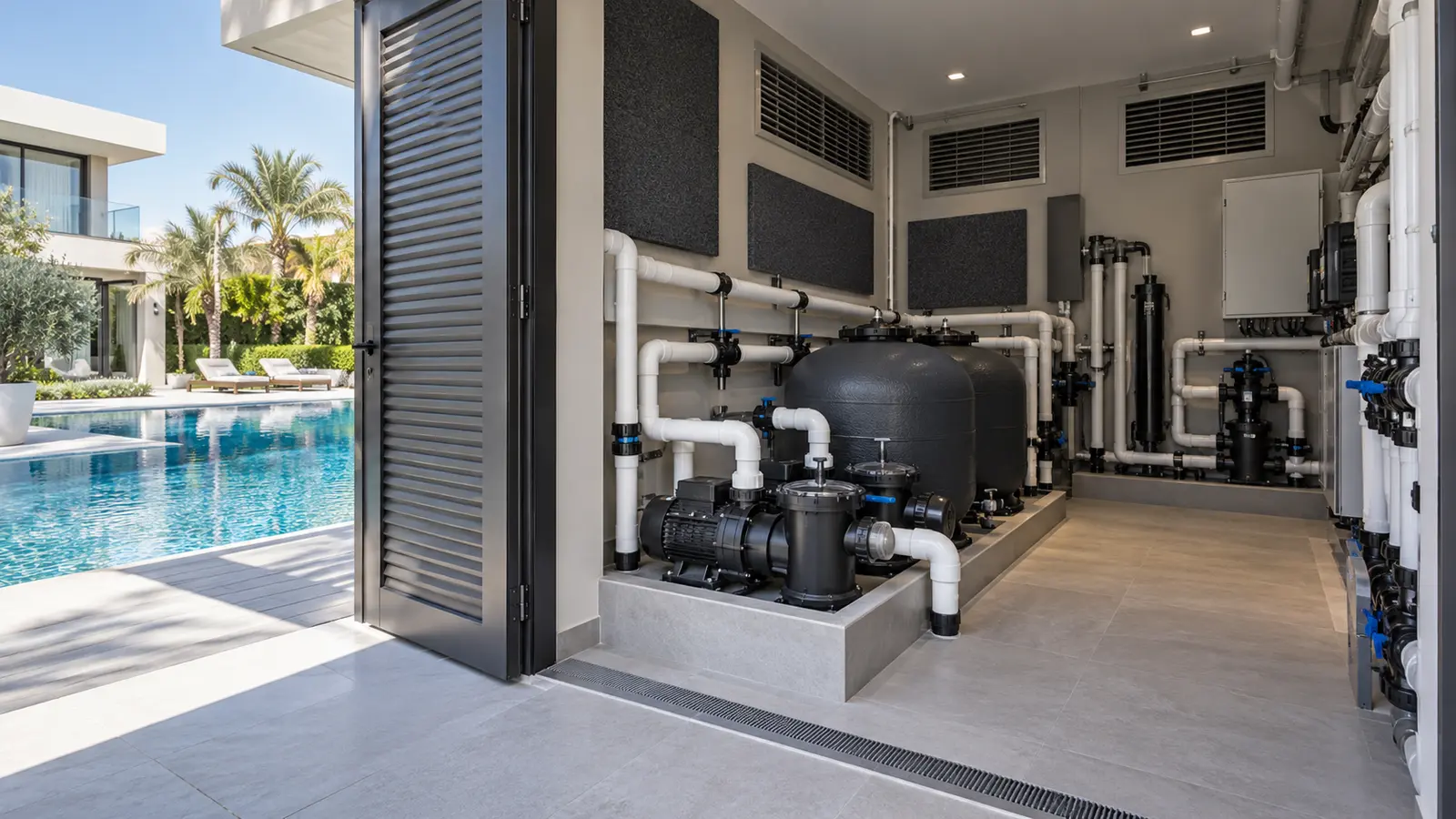
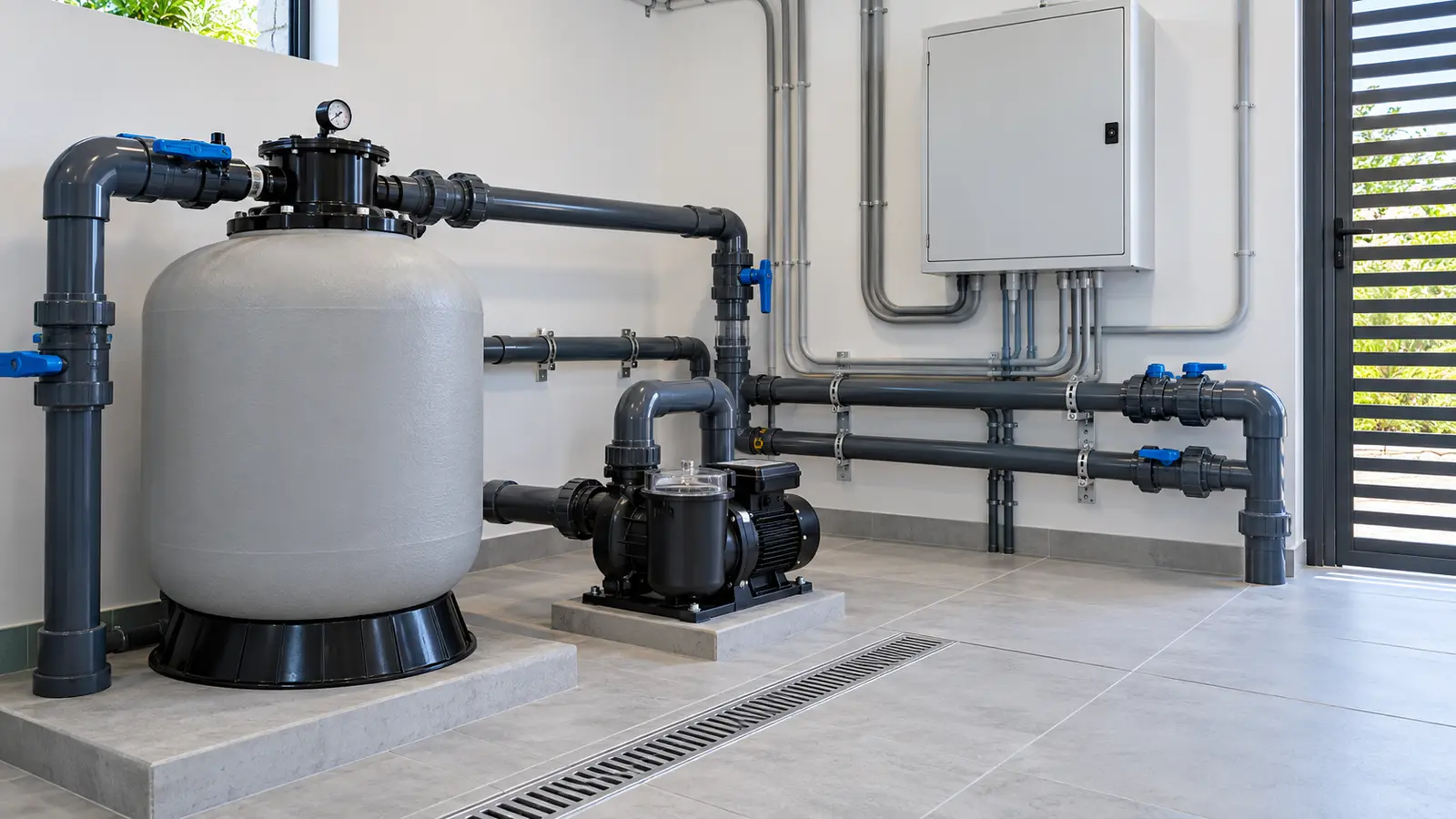
The pool’s visible outline is only part of the project. Ask the appointed specialist to identify the equipment, controls and service routes required for the proposed design. The layout should account for access and the relationship with surrounding rooms, planting and circulation. Avoid treating the equipment area as leftover space.
Discuss replacement as well as inspection
A component may be accessible for routine checks but difficult to remove. Review doors, covers and the route to the equipment area before construction. The specialist should confirm the clearances and installation conditions for the selected system. Keep decorative screening separate from the need for a practical service arrangement.
Connect access with safe operation
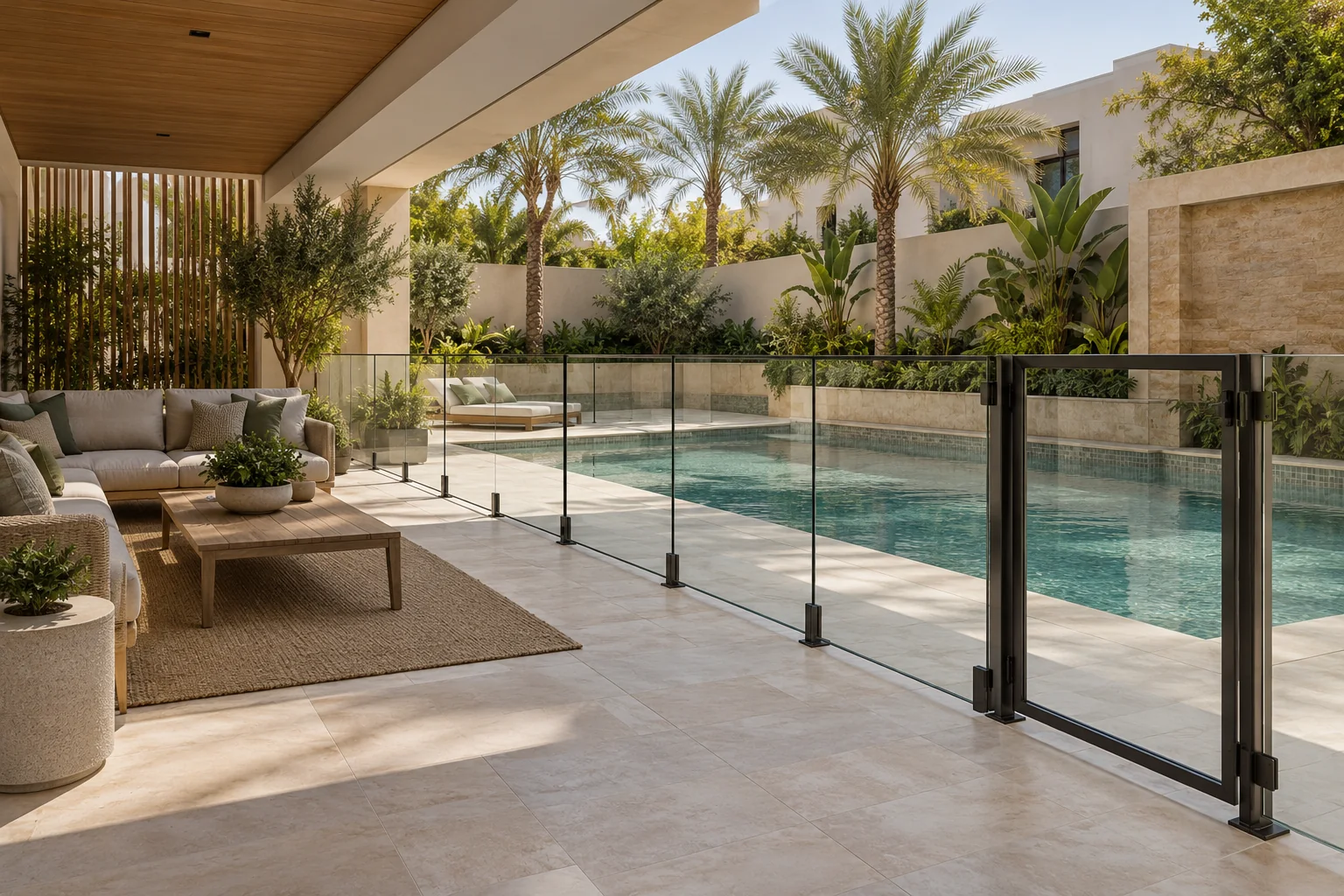
Agree who will operate and maintain the pool and what information they need. General pool-safety resources emphasise supervision and appropriate barriers; the specific project needs its own professional review and applicable requirements confirmed. Equipment access, electrical matters and water treatment belong with the appointed specialists, not improvised arrangements.
A planning scenario
In a fictional courtyard-pool concept, an attractive equipment enclosure is checked against the size of a future replacement component. The layout changes before construction to preserve the service route. This example explains a design question and does not certify any pool or equipment arrangement as safe.
A useful review checklist
Use these prompts to turn the discussion into a record that can be compared with drawings, supplier information and the project scope. Mark what is confirmed, who needs to respond and when the decision is required.
- Show equipment on the first plan
- Confirm selected-system requirements
- Review inspection and replacement routes
- Identify the operator and maintenance provider
- Keep specialist instructions and responsible contacts
Include the route to the equipment area
Show how a specialist reaches the equipment from the property entrance and how significant components would be moved if replacement is needed. Consider doors, turns, levels and surrounding landscaping. A plant area may have enough floor space yet remain difficult to access. Ask the responsible designer and equipment specialists to review the actual arrangement before permanent finishes or planting make the route harder to change.
Separate operating access from replacement access
Routine inspection and maintenance can require a different type of access from removing a major component. Ask the supplier to explain both using the actual selected equipment and manufacturer information. Keep relevant clearances and technical requirements under professional review. The owner should understand the practical consequence of the design without being expected to size or engineer the plant arrangement. Record the agreed access requirements in information shared with the wider project team.
Coordinate the enclosure with the landscape
A screen, door or planting arrangement can conceal equipment while still allowing appropriate access and operation, but the details need coordinated review. Ask the relevant specialists to assess ventilation, drainage, services and other requirements for the actual system. Do not add landscaping around a completed plant area without checking those interfaces. A visually discreet result should remain understandable and usable for the people responsible for ongoing care.
Keep access information at handover
Identify the relevant routes, controls and specialist support arrangements in the operating record. Make clear which tasks are appropriate for the owner and which require professional attendance. Keep equipment references and manuals available to the appointed maintenance provider. If a later garden project changes a gate, path or enclosure, review the effect on the pool equipment before proceeding. Access is a continuing requirement, not a one-time construction convenience.
Carry the decision through to delivery
Keep the accepted decision with the current scope and drawings. If a product, layout or responsibility changes, record the effect on the other work before purchasing or proceeding. At completion, retain the relevant operating and care information with the project record. The next conversation is more useful when the unresolved questions are visible.
Sources & further reading
Make this useful for your project.
A review of your property and priorities can turn general guidance into a defined brief.
Explore Pool equipmentDiscuss your project