The direct answer
Before circulation and filtration equipment is selected, the brief should define the pool geometry and operating use, water features, design assumptions, circulation arrangement, filtration objective, plant-room conditions, controls, temperature-control interfaces, water-treatment responsibilities, commissioning evidence and handover information. Equipment should follow a coordinated hydraulic and operational design prepared by the relevant pool specialists. Choosing a pump by headline power or a filter by a nominal pool-size label can miss pipe losses, feature demands, access and maintenance. This is professional design and commissioning work, not a homeowner installation exercise.
Define the body of water and how it will be used
Record dimensions, depths, surface area, calculated volume and the drawings or survey from which they come. Note infinity edges, balance tanks, spas, jets, water features, cleaning connections and any zones that operate differently. Describe expected use without inventing a precise bather load for a private pool. Also document exposure, debris, temperature-control strategy and periods when the property is unoccupied. These inputs help the specialist distinguish the base circulation duty from optional feature operation and decide which conditions must be tested during commissioning.
- Verified pool geometry and volume
- Overflow, balance and water-feature arrangement
- Operating patterns and idle periods
- Heating or cooling interfaces
- Debris and environmental exposure
Map circulation before naming products
The design should show where water is drawn from and returned, how branches are arranged, how flows are balanced and how the system avoids poorly served zones. Pipe sizes, route lengths, level differences, fittings and equipment all contribute to the operating condition. The pool specialist should complete the necessary calculations and coordination under the applicable requirements. The CDC Model Aquatic Health Code discusses recirculation, filtration, disinfection and monitoring for public aquatic venues. A private villa pool is not automatically governed by that code, but its systems-based structure is a useful reminder that circulation cannot be separated from filtration, treatment, operation and verification.
Compare filtration by operating consequences
Ask the specialist to explain the proposed filter type, design flow, media or element, cleaning method, pressure monitoring, water and drainage implications, consumables and replacement access. Compare how each option affects plant space, routine maintenance, backwashing or cleaning, water use and operator workload. Confirm that pumps, filters and treatment equipment are compatible at the approved design condition rather than individually plausible. Product data should be checked for the exact model and installation arrangement. If an alternative is proposed later, repeat the system review instead of accepting an isolated substitution.
- Design flow and operating range
- Cleaning or backwash method
- Pressure and condition monitoring
- Water, drain and waste implications
- Media, parts and service access
Planning example
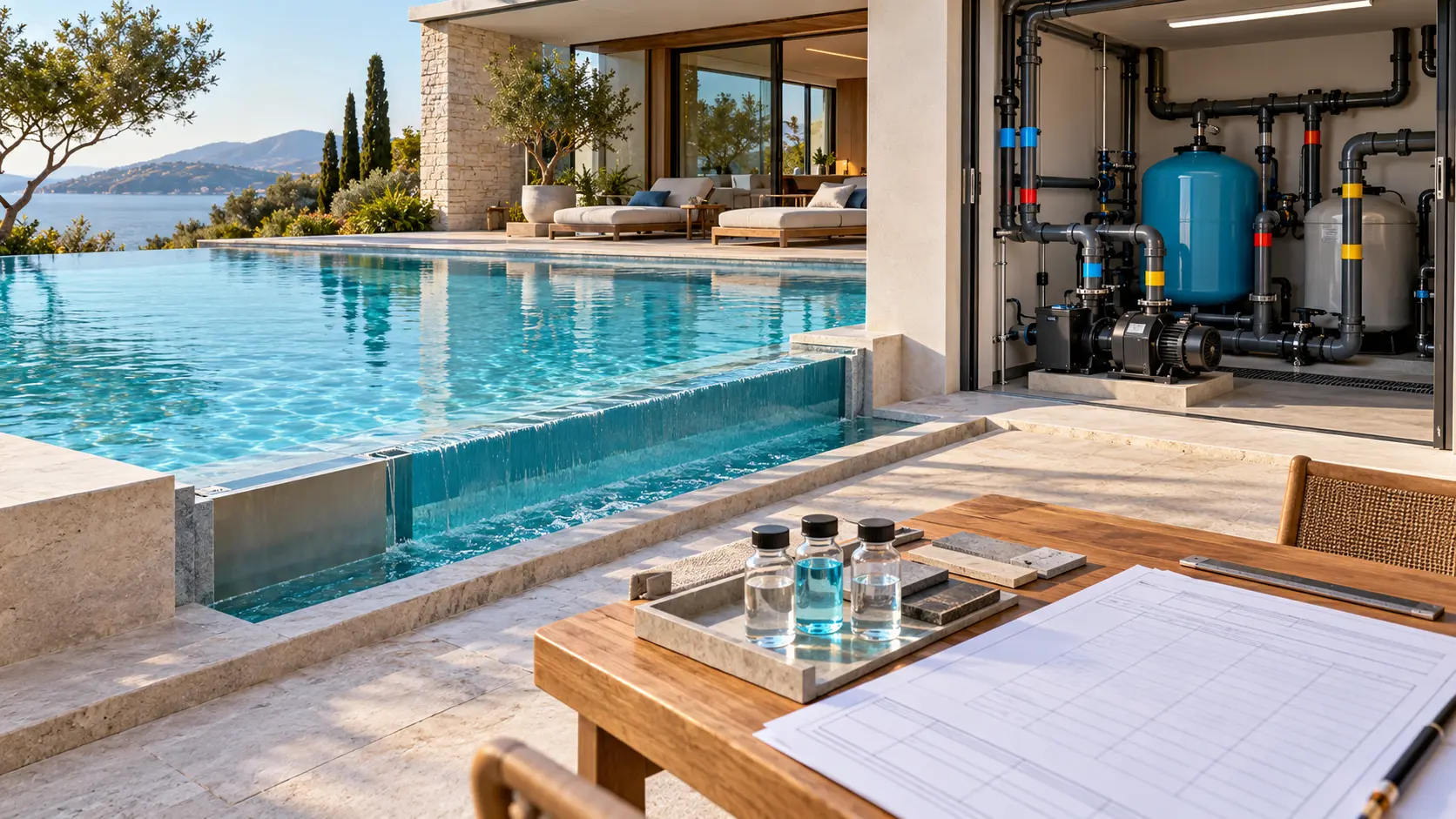
Consider a villa pool with a short infinity edge and one decorative jet. The first equipment list assumes that every feature operates with the main circulation at all times. The coordinated brief separates three conditions: normal filtration, infinity-edge use and decorative-jet use. The specialist reviews balance-tank operation, the return arrangement, pipe routes and the plant-room access, then selects compatible equipment and controls for the agreed modes. The commission plan records how each mode will be demonstrated and which readings will be retained. This does not prescribe the hydraulic solution; it shows why operating modes must be settled before product selection.
Make the plant room serviceable
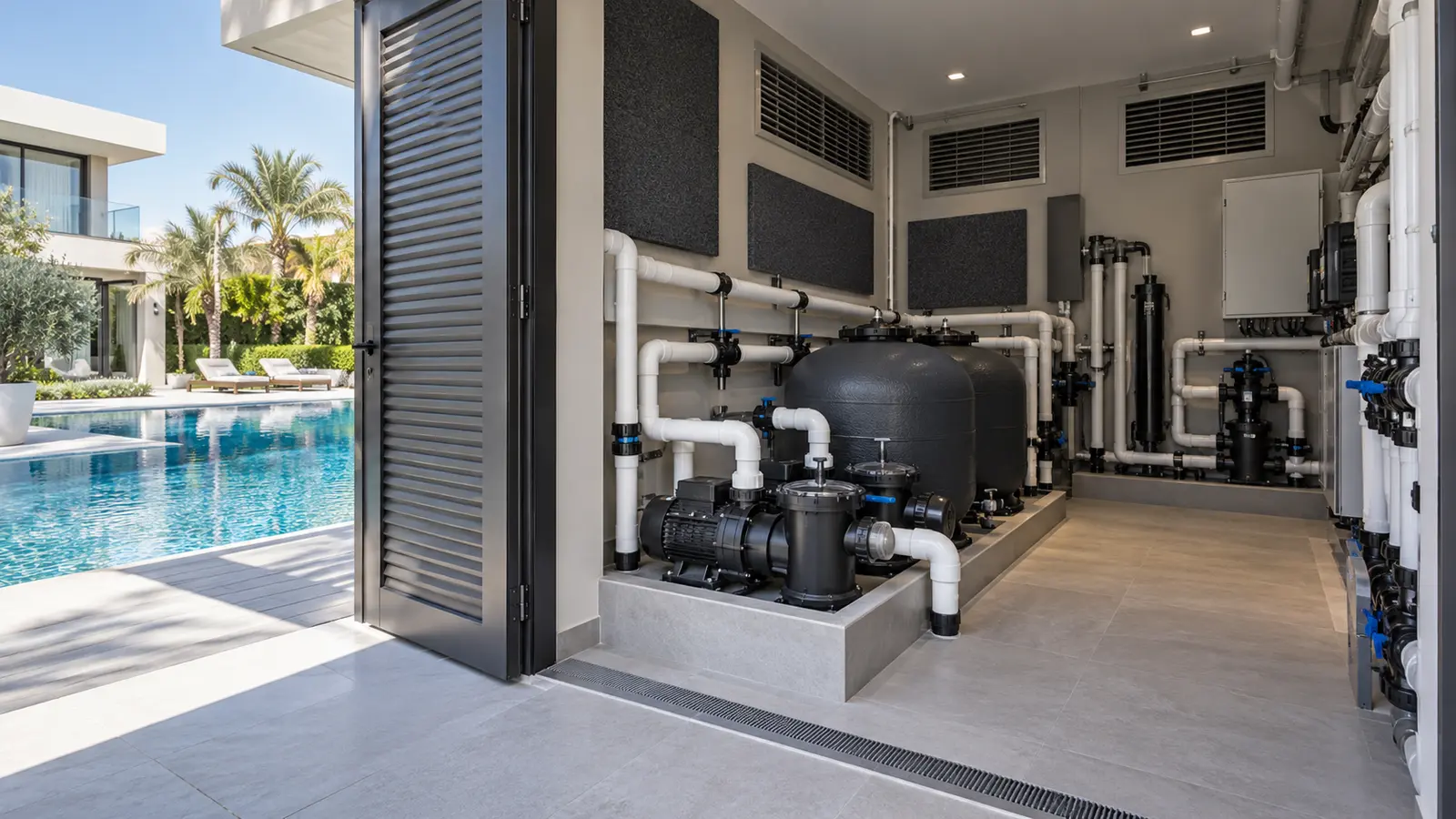
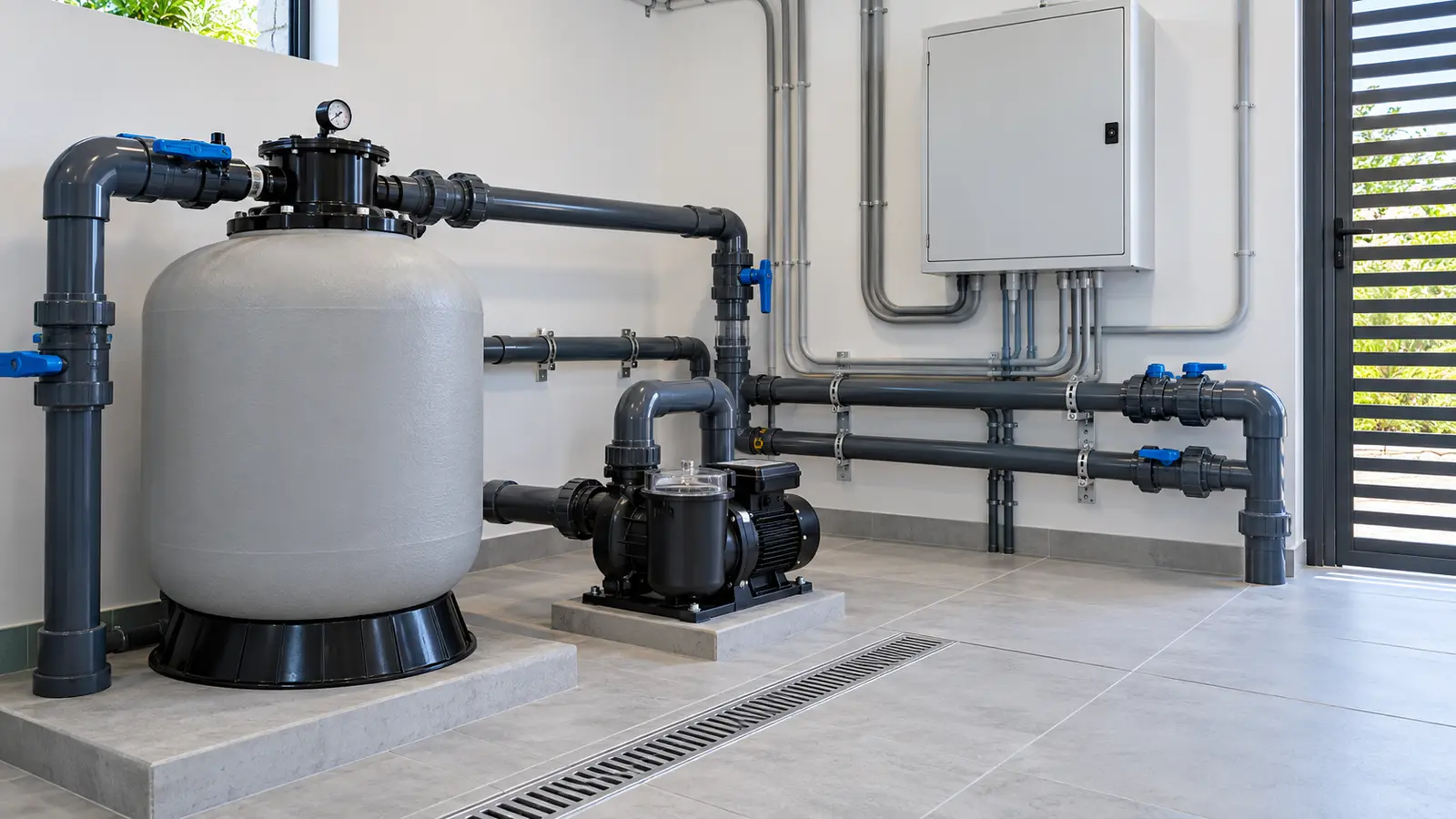
Draw the equipment at real size with manufacturer clearances and a route for removal of the largest service component. Confirm floor drainage, ventilation, lighting, electrical isolation, chemical-storage separation where relevant and access to valves, strainers, gauges and controls. Equipment labels should match the final schematic and user information. Avoid arrangements where routine maintenance requires standing on pipes or removing unrelated equipment. The project team should verify the actual safety, electrical, chemical and authority requirements for the property; a layout sketch cannot replace those assessments.
- Maintenance and replacement clearances
- Safe access to valves and strainers
- Drainage and ventilation
- Electrical and control coordination
- Consistent labels and schematic references
Write the commissioning plan before installation
Commissioning requirements influence the points, gauges, controls and access needed to verify the system. The plan should identify responsible parties, prerequisites, checks, recorded readings, operating modes, corrective-action process and acceptance criteria defined by the specialist design. Include interfaces with heating or cooling, treatment, level control and automation. Demonstrate shutdown, alarms and safe operating responses where specified. Keep dated results, final settings and deviations. A visually clear pool on one afternoon is not enough evidence that every operating mode and service interface has been reviewed.
- Approved design and product data
- Pre-start inspection
- Mode-by-mode functional checks
- Recorded settings and results
- Defect correction and final acceptance
Limits and next step
This article does not provide hydraulic calculations, chemical dosing instructions, electrical procedures, safety design or local approval requirements. The CDC reference concerns public aquatic venues and should not be presented as the governing rule for every residential pool. Before ordering equipment, ask the appointed pool specialist for a coordinated design pack containing the pool data, schematic, calculations, equipment schedule, plant-room layout, control narrative, commissioning plan and handover requirements. Review it with the architect and other service specialists so structure, finishes, power, drainage, access and temperature-control interfaces are resolved together.
- Verify pool data and operating modes
- Review the hydraulic design
- Coordinate plant space and services
- Approve exact equipment as a system
- Agree commissioning and handover evidence
Sources & further reading
Make this useful for your project.
A review of your property and priorities can turn general guidance into a defined brief.
Explore Pool equipmentDiscuss your project